
What Is Vehicle-to-Grid?
Vehicle-to-Grid is a bidirectional energy system that lets an electric vehicle exchange power with the electrical grid. The vehicle can receive electricity for charging and send stored electricity back through compatible charging equipment. Grid controls coordinate this exchange to support power management while preserving the vehicle owner's ability to use the vehicle.
Quick Facts About Vehicle-to-Grid
Category
Bidirectional energy system
Used for
Grid-connected EV power exchange
Common confusion
Vehicle-to-Home serves a building, not the wider grid
Also called
V2G, vehicle-to-grid charging
Often discussed with
Bidirectional charging system troubleshooting, Emergency EV charger repair
Key Takeaways About Vehicle-to-Grid
- Bidirectional charging distinguishes Vehicle-to-Grid from standard EV charging.
- Compatible equipment must coordinate power flow with the electrical grid.
- Vehicle-to-Home is not the same as Vehicle-to-Grid.
How Vehicle-to-Grid Works
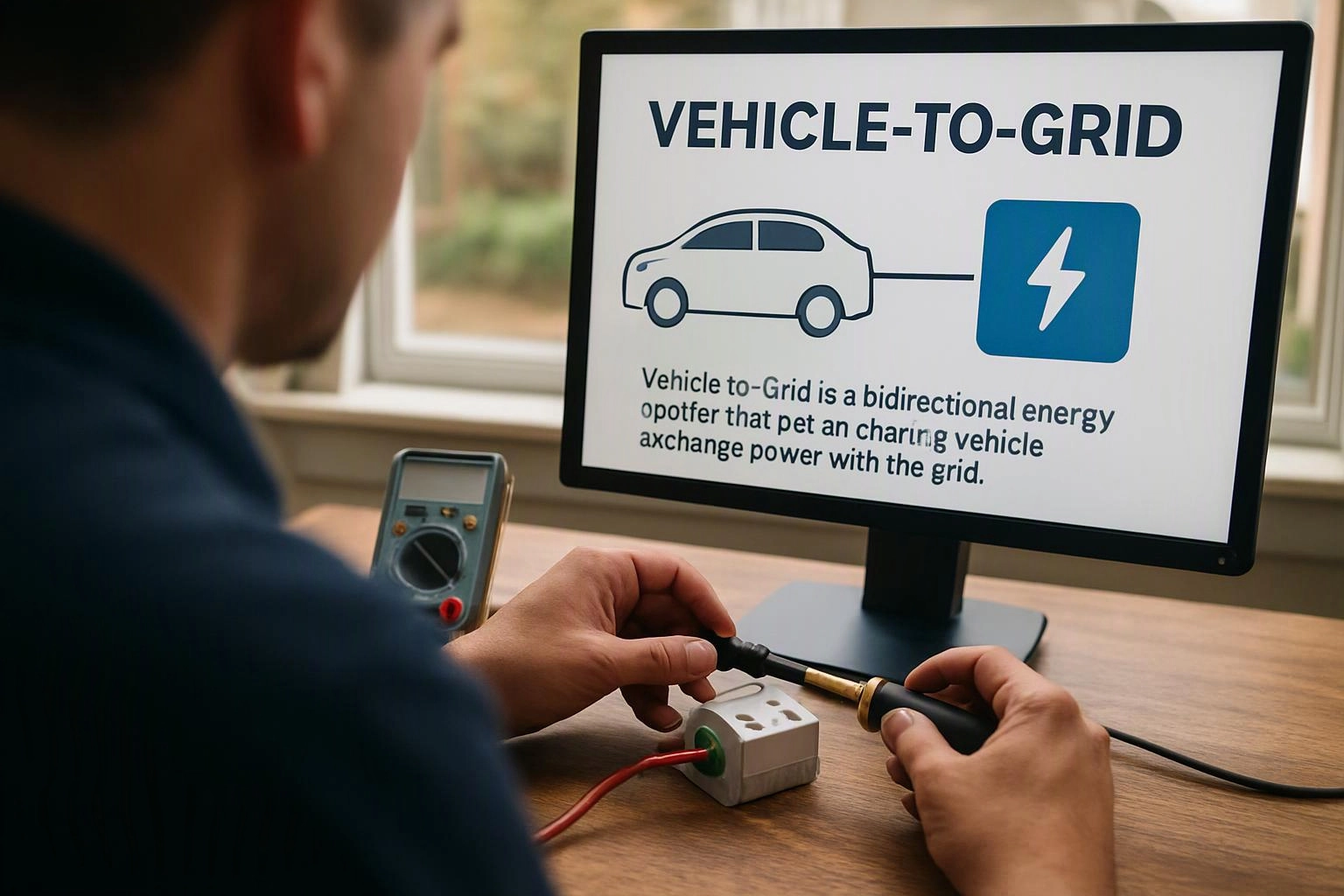
Vehicle-to-Grid works through a compatible electric vehicle, bidirectional charger, control software, and grid connection. The charger changes alternating current and direct current as needed, while the control system manages when electricity enters or leaves the vehicle battery. The utility or site controller sets operating conditions for the exchange.
Related glossary terms: EV Connector, Power Inverter, Load Shedding.
During charging, the grid supplies energy to the vehicle. During an approved discharge event, the vehicle sends stored energy through the charger toward the grid. The system monitors electrical conditions and communication between the vehicle, charger, and power inverter. A fault in any part can interrupt charging or prevent export, which makes system testing different from testing a standard EV connector.
From the GMB Electric team
When we troubleshoot Vehicle-to-Grid equipment, we check the charging hardware, power flow, wiring, and control signals as one connected system. Our team also separates vehicle faults from electrical installation faults. That distinction helps identify whether the issue involves the charger, the circuit, communication, or the grid connection.
Vehicle-to-Grid in Practice: A Real-World Example
A homeowner has an electric vehicle and a bidirectional charger connected to the home's electrical system. During a scheduled grid-support event, the charger sends controlled battery power toward the grid, then returns to normal charging when the event ends.
Related Terms
EV Connector
An EV connector is the plug and matching vehicle inlet that transfer electrical power between electric…
Power Inverter
A Power Inverter is an electrical device that converts direct current from a battery or other…
Load Shedding
Load Shedding is a controlled process that reduces electrical demand by turning off, delaying, or limiting…
Electrical Load Calculation
Electrical Load Calculation is a structured assessment of the electrical demand a property places on its…
GMB Electric
Have Questions About Vehicle-to-Grid?
Contact GMB Electric for practical guidance on Vehicle-to-Grid and related 24 hour electrician work in Indianapolis.