
What Is Load Shedding?
Load Shedding is a controlled process that reduces electrical demand by turning off, delaying, or limiting selected loads. An energy management system, transfer switch, or panel control may shed nonessential equipment when available power cannot safely support every connected circuit. The process helps maintain service for priority loads during constrained operation.
Quick Facts About Load Shedding
Category
Electrical load management
Used for
Managing limited available power
Common confusion
A planned control action, not an accidental outage
Also called
Load Management, Demand Management
Often discussed with
Emergency electrification panel-upgrade service
Key Takeaways About Load Shedding
- It controls selected loads, not necessarily the entire electrical system.
- Priority circuits stay powered while lower-priority equipment is limited.
- Load shedding is not the same as a circuit breaker trip.
How Load Shedding Works
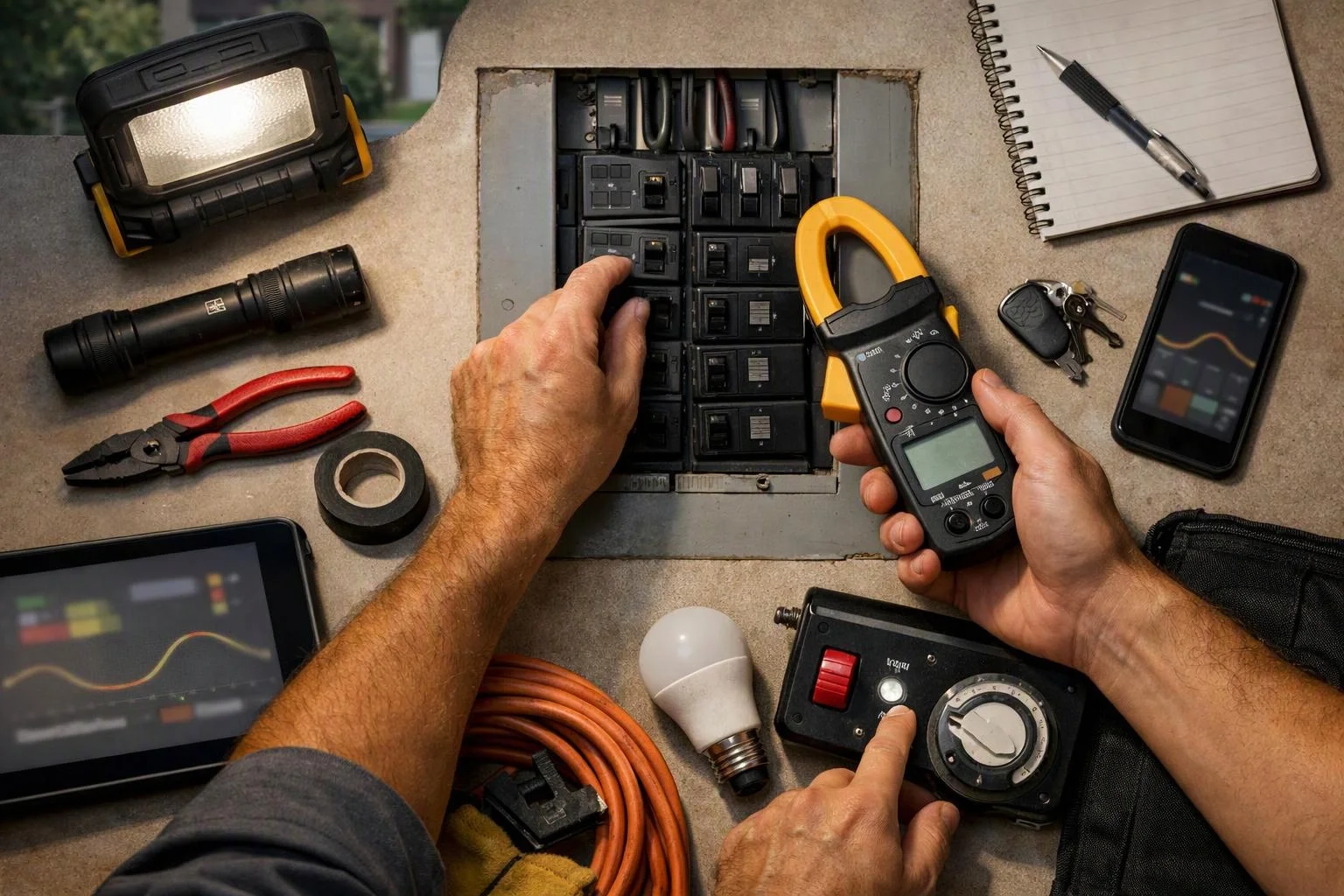
Load Shedding works by identifying circuits or equipment that can pause, reduce output, or operate at a lower priority. A control system monitors available power and sends a signal when selected loads need to be limited. Priority circuits continue receiving power while nonessential equipment remains disconnected or delayed.
Related glossary terms: Electrical Load Calculation, Circuit Breaker, Overcurrent Protection.
An electrical panel upgrade may include controls that coordinate the panel, backup power equipment, and high-demand appliances. For example, a system may pause an electric vehicle charger while a heat pump or other priority circuit operates. The control sequence must match the equipment, wiring, and intended operating conditions.
From the GMB Electric team
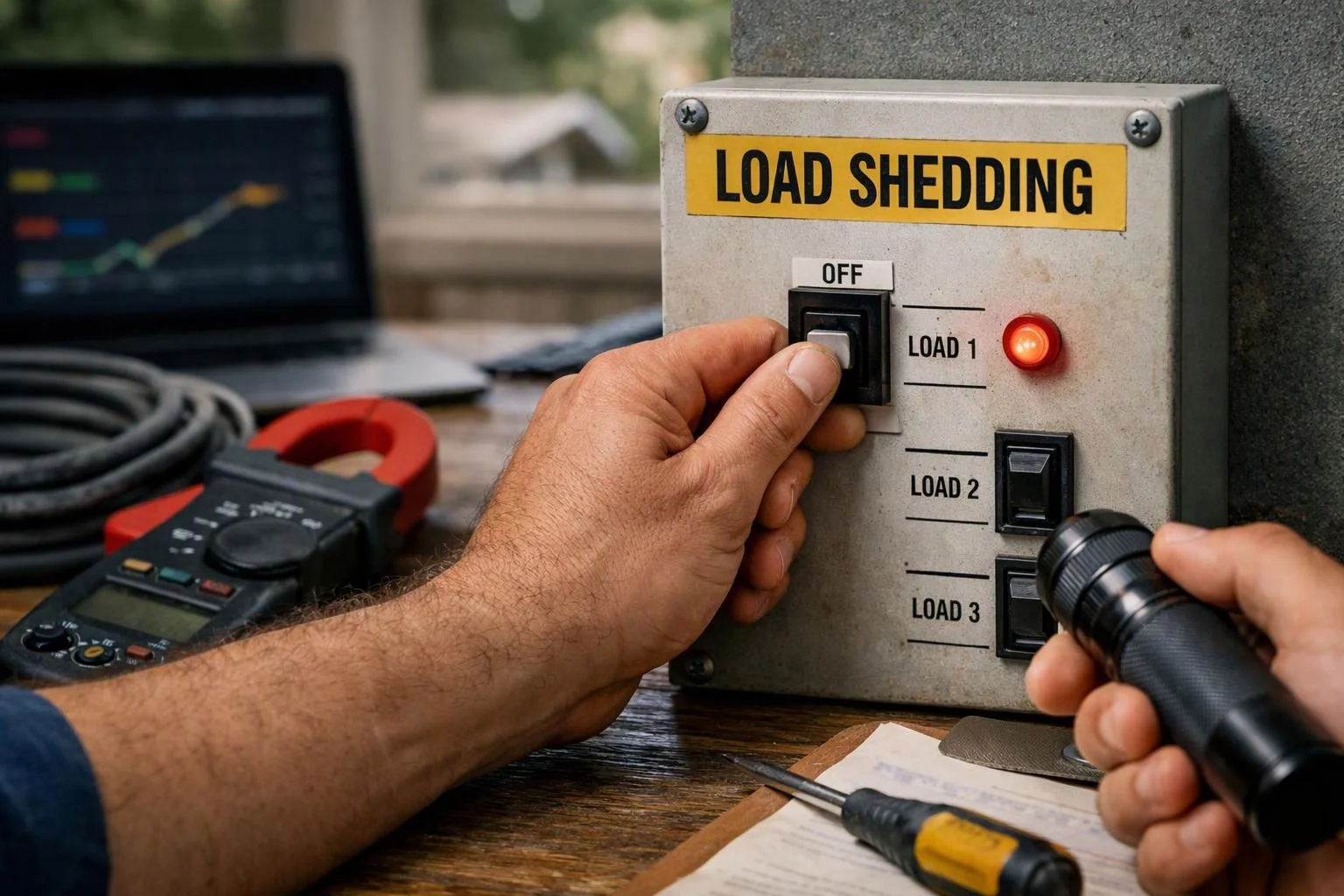
When we assess load shedding for an emergency electrification panel-upgrade service, we identify priority circuits and review how available power reaches the panel. We check control wiring, breaker arrangement, and equipment compatibility before recommending a load-management approach. Our team also verifies that selected loads respond as intended during changing operating conditions.
Load Shedding in Practice: A Real-World Example
An Indianapolis homeowner adds high-demand electric equipment while keeping existing service capacity. A load-shedding control can pause a lower-priority charger when another priority circuit needs available power, then restore the charger when capacity returns.
Related Services
Related Terms
Electrical Load Calculation
Electrical Load Calculation is a structured assessment of the electrical demand a property places on its…
Circuit Breaker
A circuit breaker is a resettable overcurrent protection device that opens an electrical circuit when current…
Overcurrent Protection
Overcurrent Protection is a system function that limits electrical current when a circuit carries more electricity…
Automatic Transfer Switch
An Automatic Transfer Switch is a power-transfer device that moves selected electrical loads between a utility…
GMB Electric
Have Questions About Load Shedding?
Contact GMB Electric for practical guidance on Load Shedding and related 24 hour electrician work in Indianapolis.