
What Is an EV Connector?
An EV connector is the plug and matching vehicle inlet that transfer electrical power between electric vehicle supply equipment and an electric vehicle. The connector carries charging current through designated contacts and may also support communication between the vehicle and charging equipment. Connector design varies by charging system, vehicle, and region.
Quick Facts About EV Connector
Category
Electric vehicle charging component
Used for
Connecting charging equipment to a vehicle
Common confusion
The connector is not the complete charging station
Also called
Electric Vehicle Connector, EV charging connector
Often discussed with
Emergency EV charger repair
Key Takeaways About EV Connector
- An EV connector is a physical interface, not the entire charger.
- A matching vehicle inlet is required for a proper connection.
- A connector is often confused with a charging station.
How EV Connector Works
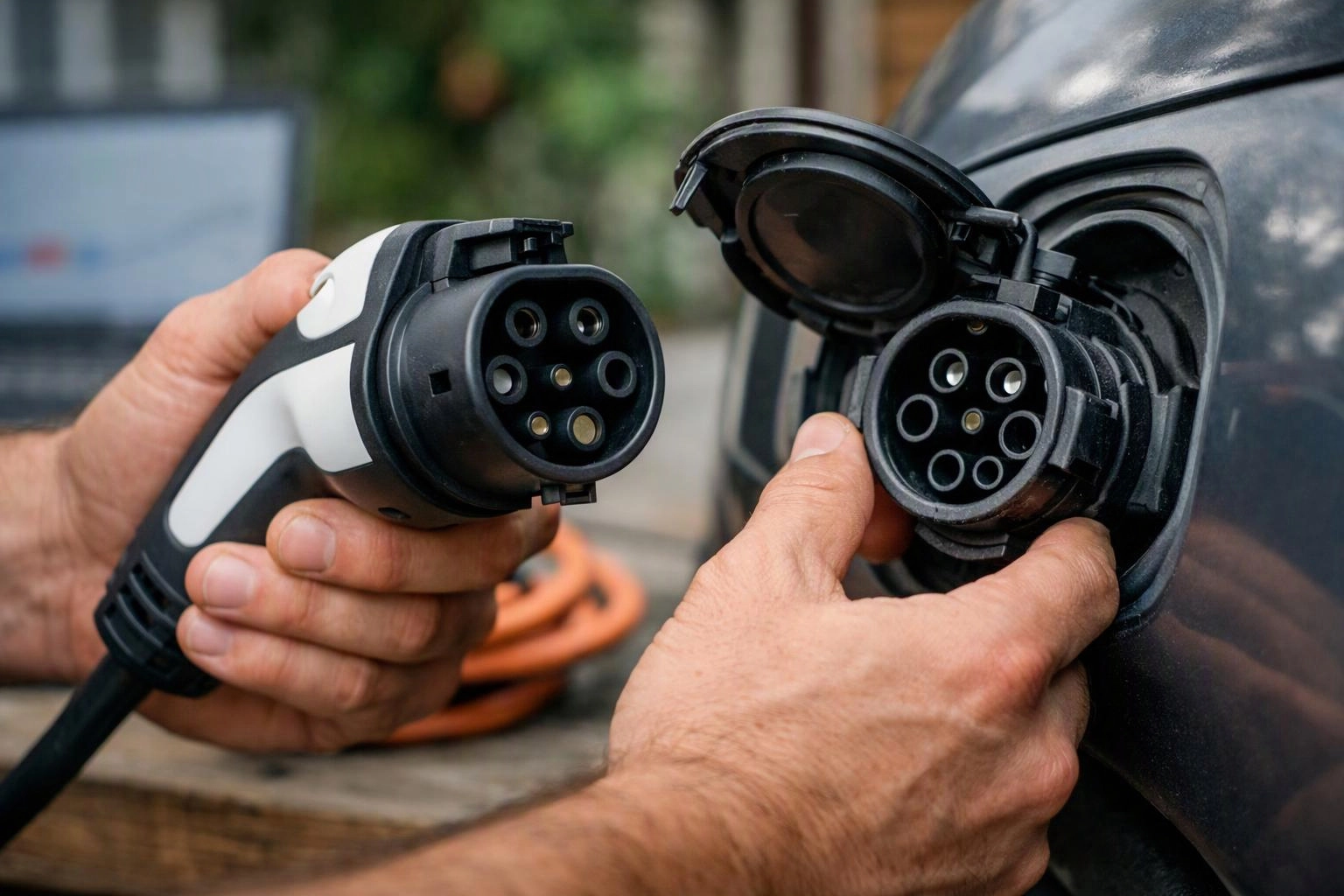
EV connector operation begins when the plug enters the matching vehicle inlet. Conductive contacts transfer electricity after the charging equipment and vehicle exchange operating information. That exchange helps the system identify whether the connection is properly seated and whether charging can begin.
Related glossary terms: Branch Circuit, Line Voltage, Voltage Drop.
Connector contacts carry power, while smaller contacts support control and communication functions. A connector may serve alternating-current charging equipment or direct-current charging equipment, depending on the system. The vehicle inlet, cable, plug, and charging equipment must work together, so a plug that physically fits may still be unsuitable for a particular vehicle or charging setup.
From the GMB Electric team
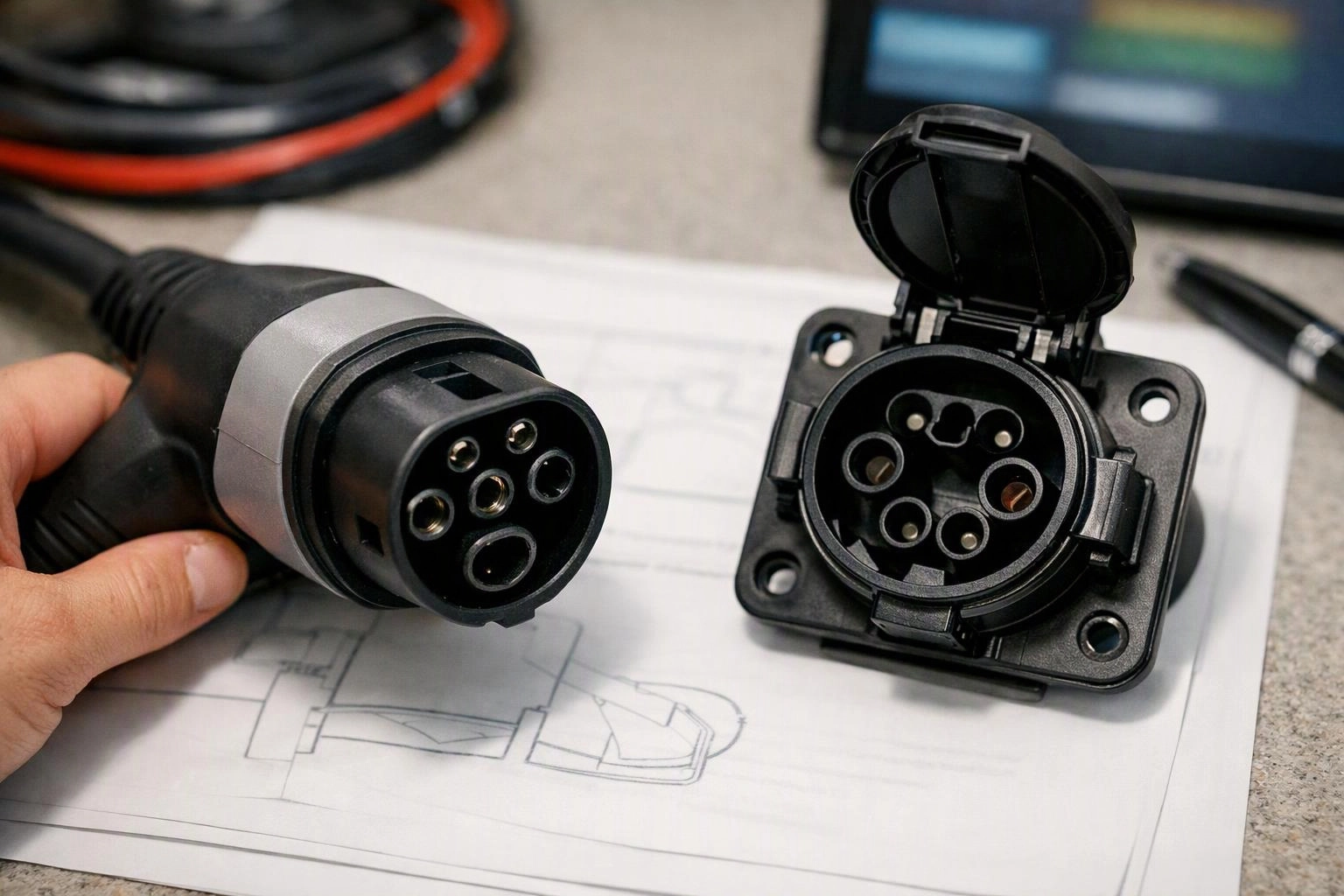
When we inspect an EV connector, we check the plug, vehicle inlet, cable, and connection points as one system. We look for looseness, heat damage, contamination, bent contacts, and signs that communication between the vehicle and charging equipment is failing. Our team also checks the supply circuit before identifying the connector as the source of a charging problem.
EV Connector in Practice: A Real-World Example
An Indianapolis homeowner reports that an electric vehicle stops charging after the plug is connected. We inspect the EV connector and vehicle inlet for damaged contacts, then check the cable and charging equipment for a connection or communication fault.
Related Services
Related Terms
Branch Circuit
A branch circuit is the portion of an electrical system that carries power from a panelboard…
Line Voltage
Line voltage is the electrical potential supplied by a power source to a circuit, appliance, or…
Voltage Drop
Voltage Drop is the reduction in electrical voltage that occurs as current travels through a conductor…
Electrical Load Calculation
Electrical Load Calculation is a structured assessment of the electrical demand a property places on its…
GMB Electric
Have Questions About EV Connector?
Contact GMB Electric for practical guidance on EV Connector and related 24 hour electrician work in Indianapolis.