Skip to content

Bidirectional Charging System Troubleshooting in Clermont, Indiana

Battery communication decides whether power can move between the battery, inverter, and property in Clermont. We trace that link and check related controls.

Licensed & InsuredFree EstimatesSame-Day ServiceServing 41 Communities

Quick Summary: Bidirectional Charging System Troubleshooting in Clermont, Indiana

Bidirectional charging system troubleshooting in Clermont is provided by GMB Electric for homes and businesses. The service covers battery communication, inverter faults, transfer switches, and grid settings, with residential and commercial electrical support available 24 hours for emergencies.

  • What we do: GMB Electric provides Bidirectional charging system troubleshooting for homes and businesses in Clermont, Indiana.
  • What is included: We trace battery communication, check inverter faults, test transfer switch operation, and review grid settings.
  • What you get: The customer receives a clear fault finding and a practical decision about repair, adjustment, or further electrical work.

Why is my bidirectional charging system not transferring power?

A failed battery communication link, inverter fault, transfer switch issue, or incorrect grid setting can stop power transfer. GMB Electric checks these points in sequence and explains which repair or adjustment fits the fault.

Dedicated Service Coverage in Clermont

Bidirectional charging systems link a battery, inverter, transfer switch, and property electrical system. A fault in one link can stop power transfer even when the battery appears charged.

This service is for property owners who see failed transfer, repeated system warnings, unexpected shutdowns, or power that moves in only one direction. We focus on diagnosis first, then explain whether the issue calls for a setting change, repair, or a separate electrical service.

The key decision is whether the fault sits in the charging equipment or the property wiring. Our team checks the electrical path and control signals so you can choose the right next step without guessing.

  • Check whether the battery and inverter are communicating.
  • Review inverter fault status and related warning messages.
  • Test transfer switch operation during the reported fault.
  • Review grid settings that control power flow.
  • Separate equipment faults from property wiring issues.
A man in a white hard hat stands beside a service van, holding a black case outside a brick building

Service Overview

Bidirectional charging system troubleshooting is a fault-finding service that checks why stored power cannot move as intended.

  • This work differs from basic EV charging repair because it checks power flow in both directions and reviews the controls that manage that flow.
  • GMB Electric provides this service for homes and businesses in Clermont.
Process

How We Troubleshoot Failed Bidirectional Power Transfer

1

Record the power transfer symptom

We review what the system did, when the fault appeared, and whether any warning message or reset preceded it.

2

Check communication and inverter status

The battery communication path and inverter status show whether the control system is exchanging the information needed for power flow.

3

Test the transfer switch

We check whether the transfer switch responds correctly when the system calls for power to move between sources.

4

Review grid settings

Grid settings are checked against the reported behavior so a control setting is not confused with a failed electrical part.

5

Explain the repair decision

We describe the fault, identify any separate electrical work, and provide a free estimate when further service is appropriate.

How We Approach Bidirectional Charging Faults

Start with the reported symptom

The first check links the failed power transfer to the system state when it stopped. Warning messages, reset history, and transfer behavior help set the inspection path.

Separate control faults from wiring

Battery communication and grid settings can point to a control issue, while a transfer switch or circuit problem may need electrical repair. We explain that distinction before setting the work scope.

Know when this is the wrong service

A utility outage or a battery replacement need may require a different service. We identify that limit when the fault does not come from the bidirectional charging controls.

Licensed and insured electrical work

Our licensed and insured electricians handle the electrical checks tied to this service, with careful testing before we explain the next step.

When this service is the right fit

A typical property scenario involves a system that shows a charged battery but does not send power to the building. We check the communication link first, then inspect inverter status, transfer switch behavior, and grid settings. If the equipment operates correctly, we examine the property-side electrical connection and explain whether separate repair work is needed.

What This Troubleshooting Work Changes for You

You learn whether the fault comes from communication, controls, or property wiring.

A clear diagnosis helps you choose repair or replacement work with better information.

Testing the transfer switch can identify a control problem before it affects backup power use.

Reviewing grid settings can prevent a setting error from being mistaken for a failed battery.

The service supports safer decisions for residential and commercial electrical systems.

What Bidirectional Charging System Troubleshooting Includes

GMB Electric provides comprehensive Bidirectional charging system troubleshooting in Clermont. Here's what you get:

  • We inspect the battery communication path and related connections.
  • We check inverter fault messages and operating status.
  • We examine the transfer switch that directs power between sources.
  • We review grid settings that affect charging and discharge behavior.
  • We test the system response and explain the fault we find.
  • We provide a free estimate when further electrical work is needed.

Which Part of the System May Block Power Transfer

These system areas point to different checks during bidirectional charging troubleshooting.

System areaWhat the symptom may showWhat we check
Battery communicationThe battery and controls may not exchange the needed signal.We trace communication and review related status information.
Inverter faultThe inverter may block conversion or controlled power flow.We check fault status and connect it to the reported symptom.
Transfer switchThe property may not change between available power sources.We test switch operation and its control response.
Grid settingsA setting may limit charging or discharge behavior.We review the settings against the system behavior.

The GMB Electric Standard

  • Careful Assessment
  • Clear Explanations
  • Safe Practices
  • Orderly Work Areas

Questions About Bidirectional Charging System Faults

Why does battery communication stop power transfer?

Battery communication failure can stop the inverter from receiving the control signal needed for power transfer. GMB Electric checks the communication path, inverter status, and related connections. A warning message can help narrow the fault, but testing confirms whether the issue is communication or another control problem. Share the exact warning when requesting service.

How does a troubleshooting visit move from the first call to the last step?

The visit starts with the reported symptom and ends with a tested fault finding and repair decision. We review the warning or failed transfer, inspect communication and inverter status, test the transfer switch, and review grid settings. The final explanation separates equipment faults from property electrical work and identifies the next service step.

Which part of the property decides the troubleshooting scope?

The equipment connection between the charging system and property electrical panel often decides the troubleshooting scope. Access, panel condition, transfer switch placement, and the reported power path affect which checks we perform. We inspect the connection before recommending separate wiring work, so the estimate reflects the actual electrical issue.

Which material changes how long the troubleshooting takes?

The main time factor is the access and wiring arrangement around the equipment, not a single material. Enclosed conduit, difficult panel access, or older connections can require more careful tracing. We check the accessible electrical path, record the fault, and explain any added work before proceeding.

What should I do before requesting this electrical assessment?

Record the warning message, note whether power transfers in either direction, and avoid repeated resets. Those details help us choose the first checks. Keep the equipment area accessible, but do not remove covers or change wiring. We use the reported symptom with our inspection findings to set the repair scope.

When is failed power transfer an urgent electrical concern?

Failed power transfer becomes urgent when you notice a burning smell, buzzing panel, sparking, or repeated breaker trips. Stop using the affected equipment and keep clear of the panel. Our 24-hour emergency availability covers urgent electrical concerns, while the inspection determines whether the charging system or property wiring needs attention.
Contact

Request a Bidirectional Charging Troubleshooting Estimate in Clermont

Request your estimate for bidirectional charging system troubleshooting, and urgent requests get priority scheduling.

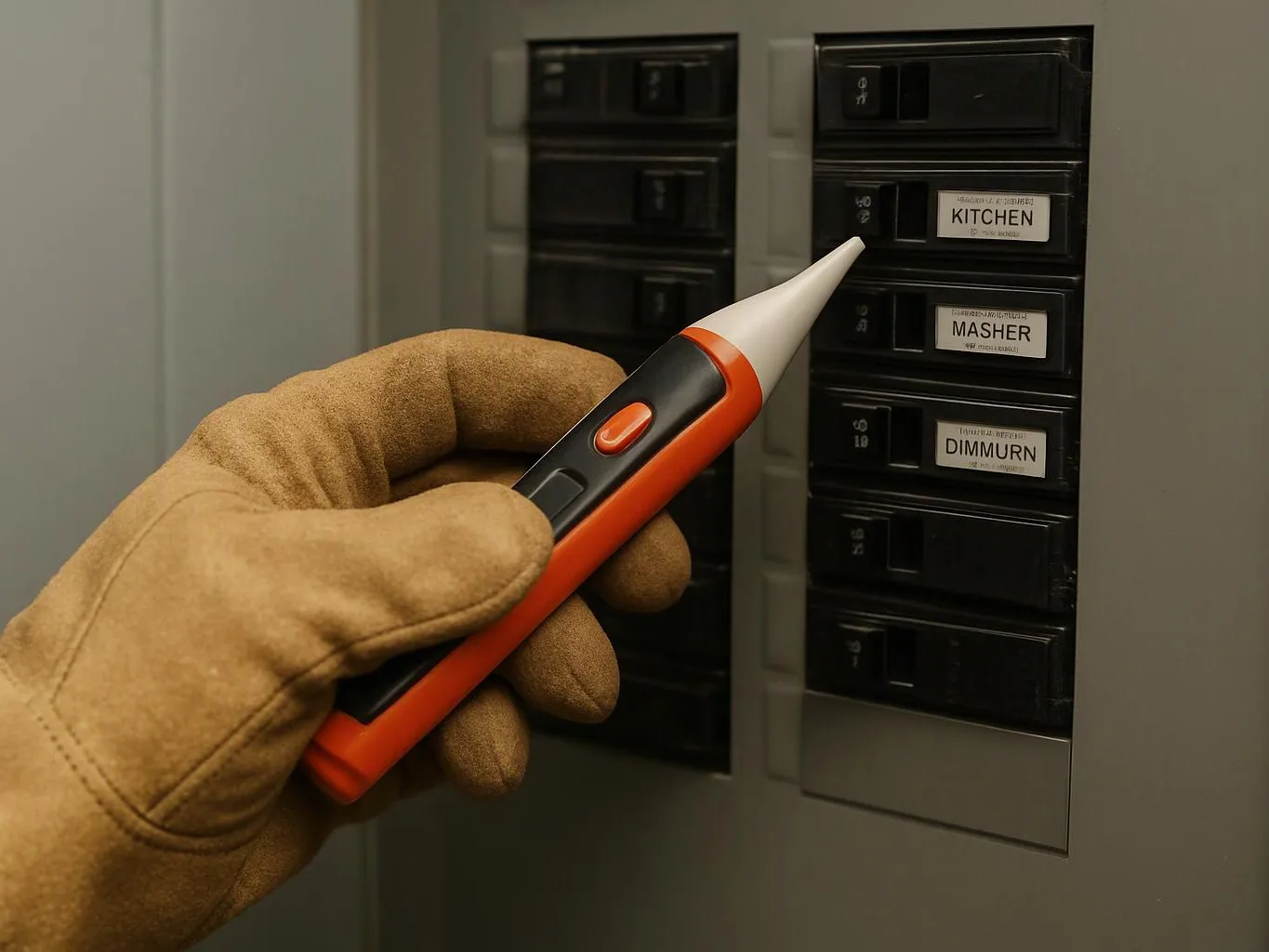
A gloved hand holds a voltage tester near labeled electrical circuit breakers in a panel

Bidirectional charging system troubleshooting in Other Areas

(317) 608-1220