
What Is Polarity?
Polarity is the arrangement of electrical connections that identifies the intended direction of current or the relationship between conductors. In alternating-current wiring, polarity distinguishes the energized line conductor from the neutral conductor. In direct-current systems, polarity identifies positive and negative connections. Correct polarity helps equipment operate as designed and supports safe testing.
Quick Facts About Polarity
Category
Electrical connection characteristic
Used for
Checking conductor relationships
Common confusion
Polarity and grounding are different
Also called
Electrical Polarity
Often discussed with
Electrical Safety Inspection
Key Takeaways About Polarity
- Polarity identifies conductor roles or positive and negative terminals.
- A tester can reveal reversed line and neutral connections.
- Polarity is not the same as grounding.
How Polarity Works
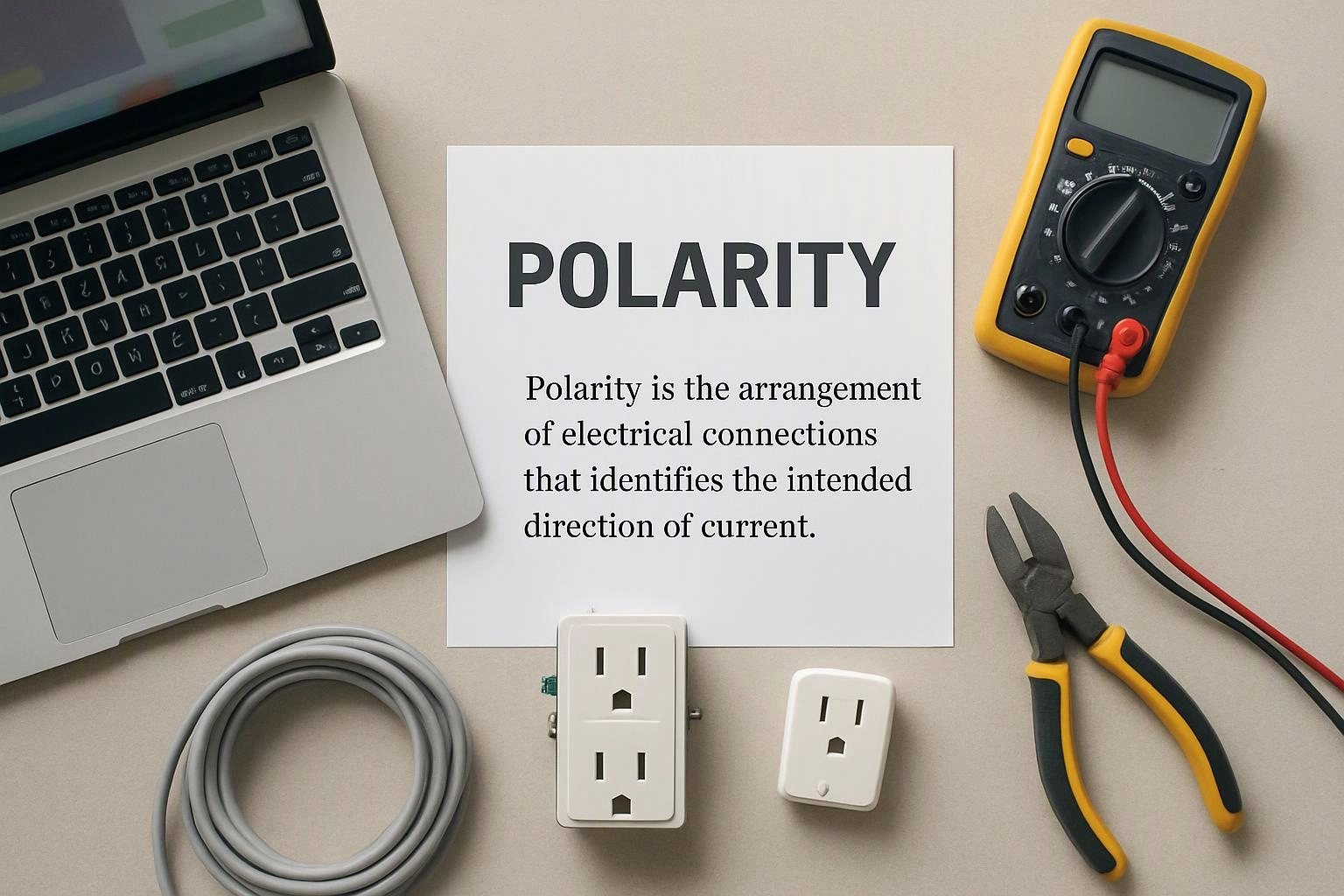
Polarity describes how electrical terminals or conductors relate to one another. In a typical alternating-current branch circuit, the line conductor carries the supply voltage, while the neutral conductor provides the intended return path. In a direct-current circuit, positive and negative markings identify the connection points that equipment requires.
Related glossary terms: Neutral Wire, Electrical Grounding, Line Voltage.
During an electrical safety inspection, a tester checks whether receptacle conductors occupy their intended terminals. Reversed line and neutral connections can leave switching or internal parts energized when equipment appears off. Polarity testing also helps identify a disconnected neutral, crossed conductors, or a direct-current connection that could damage equipment. Electrical grounding serves a different purpose. Grounding provides a path for fault current and does not correct a reversed polarity condition.
From the GMB Electric team
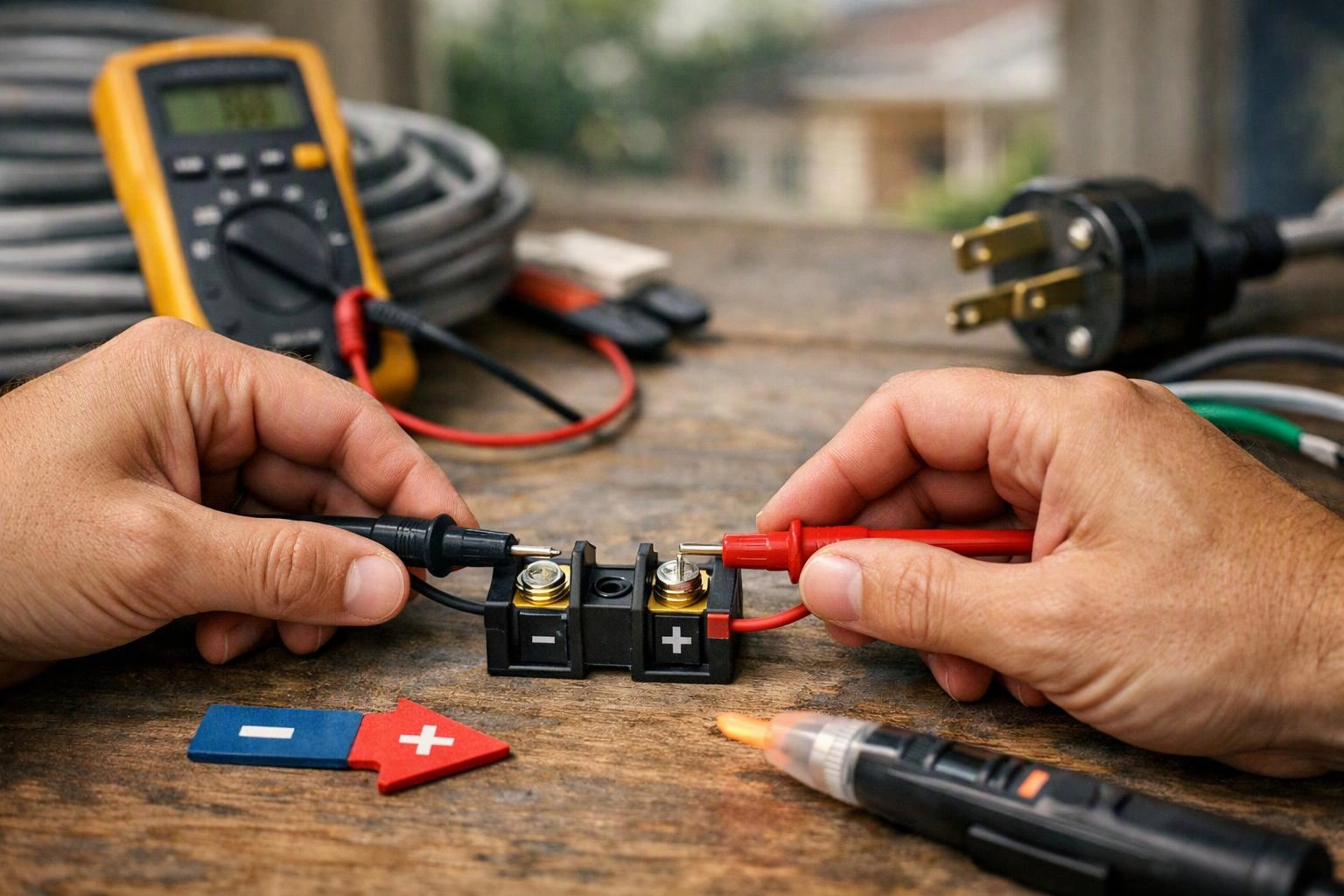
When we perform an Electrical Safety Inspection, we test receptacles and accessible connections for correct polarity. We compare tester results with the circuit layout and investigate readings that suggest a reversed conductor, open neutral, or other wiring fault.
Polarity in Practice: A Real-World Example
During an Electrical Safety Inspection, a receptacle tester indicates reversed line and neutral conductors at a wall outlet. We trace the circuit to locate the incorrect termination and verify the outlet after the connection is corrected.
Related Services
Related Terms
Neutral Wire
Neutral wire is a current-carrying conductor that completes the electrical path from a load back to…
Electrical Grounding
Electrical Grounding is a wiring method that connects electrical systems and exposed metal parts to the…
Line Voltage
Line voltage is the electrical potential supplied by a power source to a circuit, appliance, or…
Wiring Diagram
A Wiring Diagram is a visual map of an electrical circuit that shows wires, devices, connections…
GMB Electric
Have Questions About Polarity?
Contact GMB Electric for practical guidance on Polarity and related 24 hour electrician work in Indianapolis.