
What Is Electrical Grounding?
Electrical Grounding is a wiring method that connects electrical systems and exposed metal parts to the earth or a conductive grounding path. The connection helps carry fault current away from people and equipment, supports overcurrent device operation, and limits unwanted voltage on metal enclosures. Grounding works with bonding and circuit protection.
Quick Facts About Electrical Grounding
Category
Electrical safety method
Used for
Fault-current control and voltage stabilization
Common confusion
Grounding is not the neutral wire
Also called
Grounding, Electrical earthing
Often discussed with
Electrical Safety Inspection
Key Takeaways About Electrical Grounding
- Grounding provides a fault-current path, not a normal return path.
- Grounding connects systems, equipment, and earth through conductive paths.
- Grounding is not the same as bonding or the neutral conductor.
How Electrical Grounding Works

Electrical Grounding connects an electrical system to earth or to a grounding path through conductors and related equipment. Under normal conditions, current follows the intended circuit conductors. If insulation fails and energizes a metal enclosure, the grounding path gives fault current a low-impedance route back toward the source.
Related glossary terms: Bonding Jumper, Grounding Electrode, Ground Fault.
That fault path supports the operation of protective devices, such as a circuit breaker, which can disconnect the affected circuit. Grounding also works with bonding, which joins conductive metal parts so they remain at a similar electrical potential. A grounding electrode connects the electrical system to the earth, while equipment grounding conductors protect metal parts connected to the circuit.
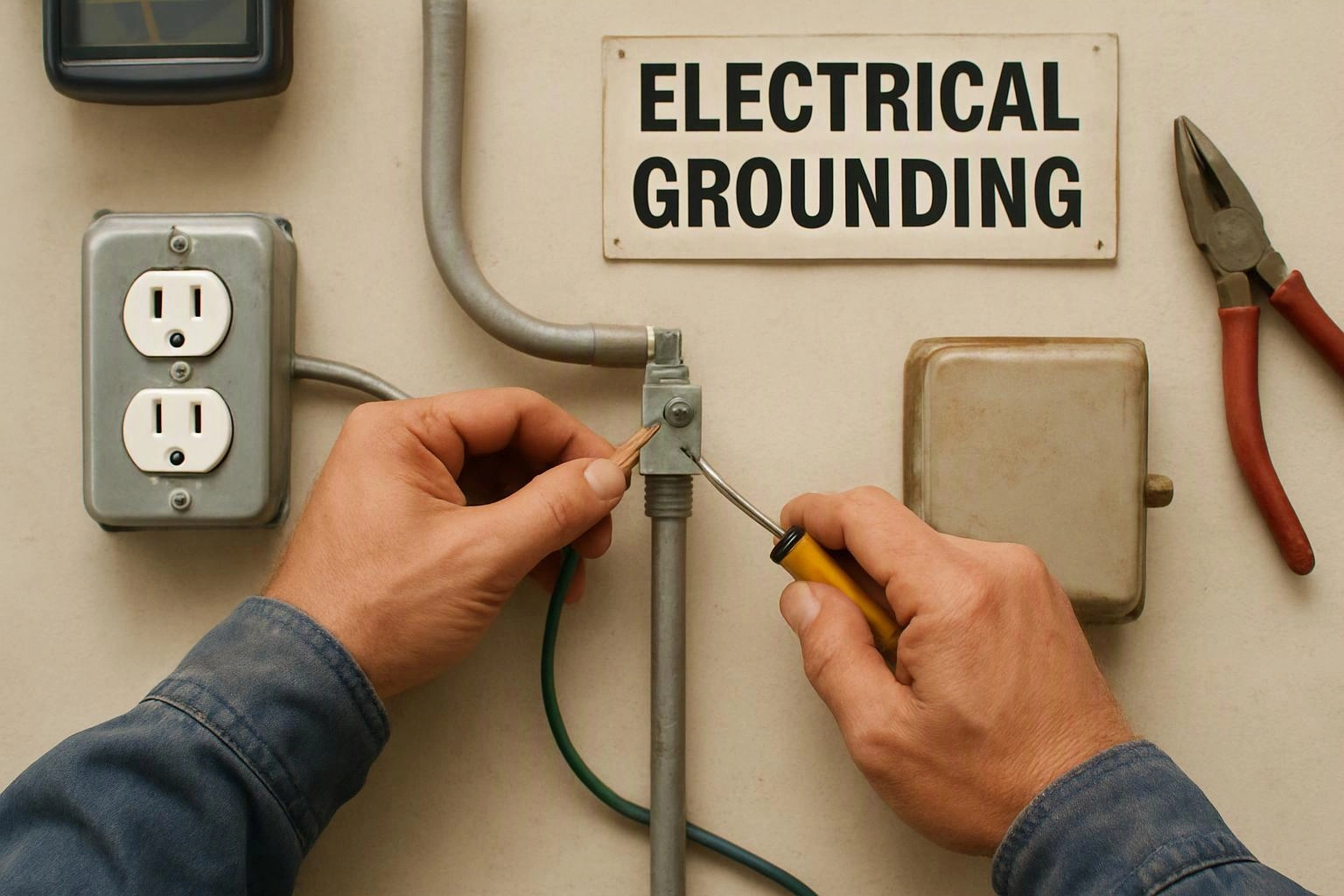
From the GMB Electric team
When we perform an Electrical Safety Inspection, we trace grounding paths from the service equipment through branch circuits and connected devices. We check grounding conductors, equipment connections, bonding points, and grounding electrodes for continuity and secure connections. Our team also looks for equipment that appears grounded but lacks a complete return path for fault current.
Electrical Grounding in Practice: A Real-World Example
During an Electrical Safety Inspection, a metal receptacle box may show a grounding connection that is loose or absent. We inspect the box, receptacle, and circuit conductors to determine whether the grounding path continues back to the electrical service equipment.
Related Services
Related Terms
Bonding Jumper
A bonding jumper is a conductive connection that joins metal electrical parts so they share a…
Grounding Electrode
A grounding electrode is a conductive connection between an electrical system and the earth. Common electrodes…
Ground Fault
A ground fault is an unintended electrical connection between an energized conductor and a grounded surface…
Neutral Wire
Neutral wire is a current-carrying conductor that completes the electrical path from a load back to…
GMB Electric
Have Questions About Electrical Grounding?
Contact GMB Electric for practical guidance on Electrical Grounding and related 24 hour electrician work in Indianapolis.