What Is Line Voltage?
Line voltage is the electrical potential supplied by a power source to a circuit, appliance, or lighting system. It is the voltage present on energized conductors before a device changes or uses that power. Electricians check line voltage during troubleshooting to confirm whether power reaches the equipment and where a fault may begin.
Quick Facts About Line Voltage
Category
Electrical measurement
Used for
Powering circuits and equipment
Common confusion
Low-voltage control circuits
Also called
Mains Voltage, Supply voltage
Often discussed with
Electrical Troubleshooting
Key Takeaways About Line Voltage
- Line voltage exists on the supply side of electrical equipment.
- A voltage check helps locate interrupted power during troubleshooting.
- Line voltage is not the same as low-voltage control power.
How Line Voltage Works
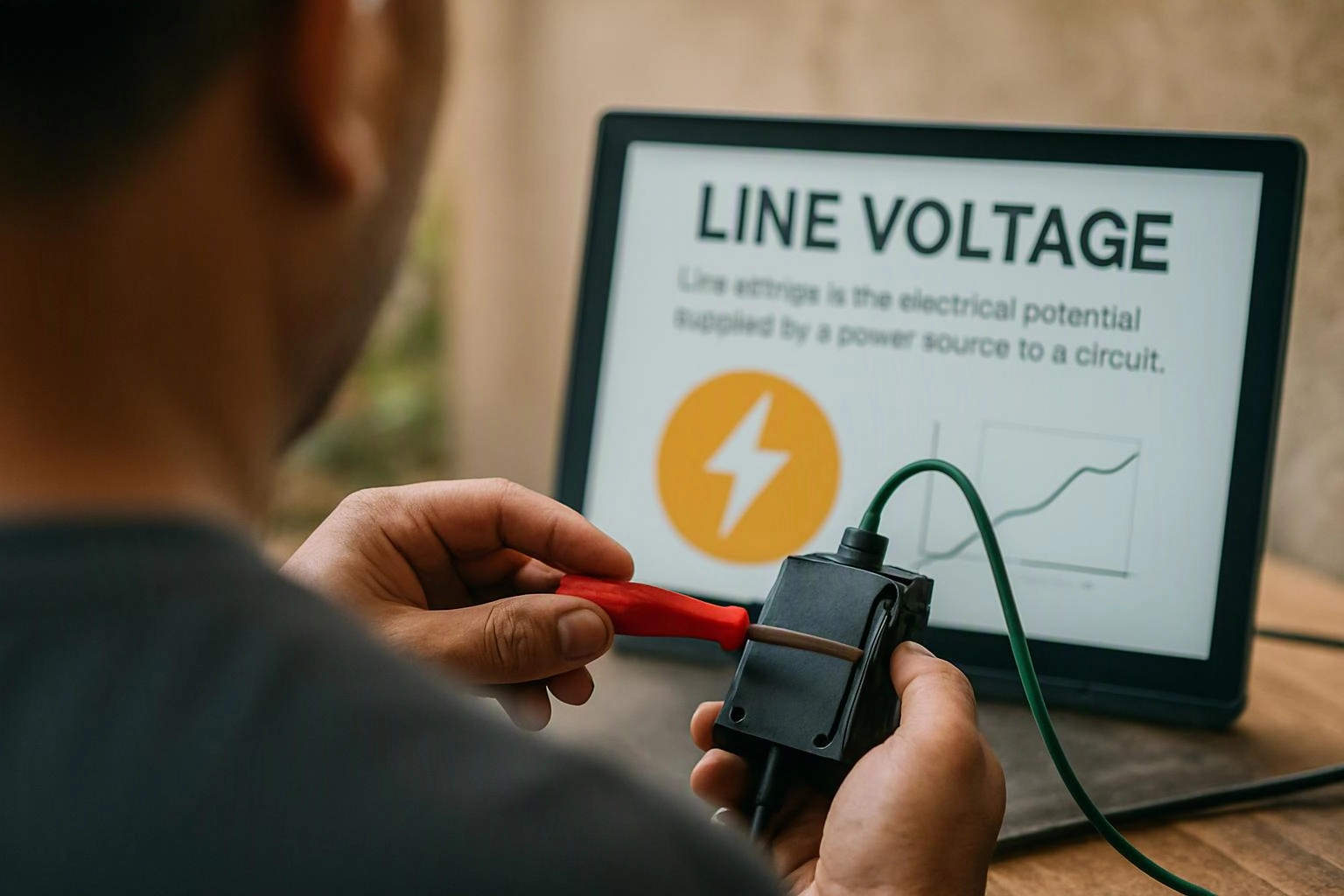
Line voltage travels from the electrical source through supply conductors to a connected load. The voltage creates the electrical pressure that allows current to flow when the circuit is complete. A meter measures the potential between selected conductors, such as a hot conductor and a neutral conductor.
Related glossary terms: Branch Circuit, Circuit Breaker, Neutral Wire.
During electrical troubleshooting, a technician checks for line voltage at several points in the circuit. Voltage at the panel but not at an outlet can point to an open connection, damaged conductor, or tripped protective device. Equipment may also have control voltage that operates switches or electronics. That lower-voltage circuit does not replace the line voltage that powers the equipment.
From the GMB Electric team
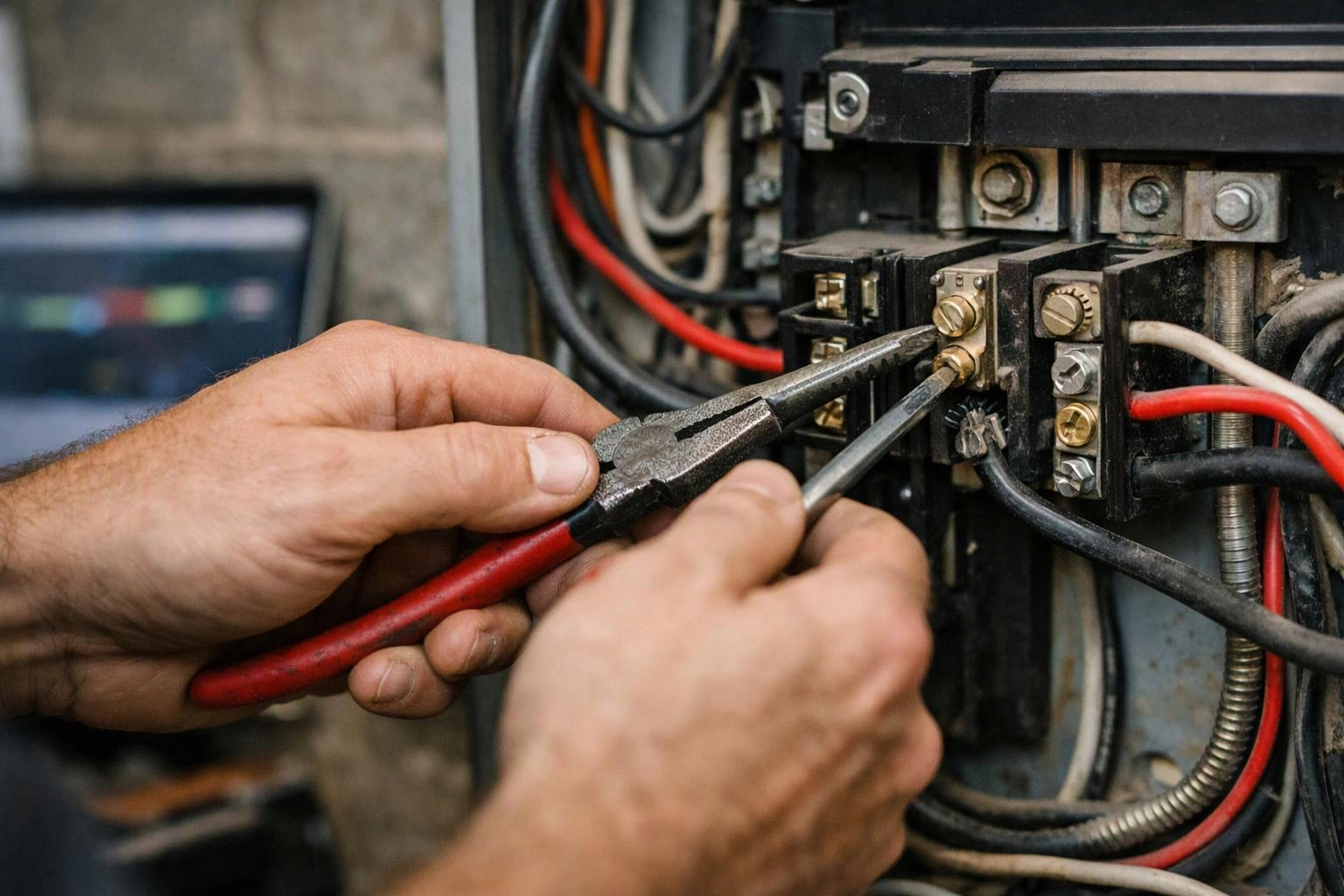
When we troubleshoot an electrical problem, we trace line voltage from the source toward the affected equipment. We compare readings at the panel, disconnect, switch, and load to identify where power stops. We also separate supply voltage from control voltage so the diagnosis addresses the correct part of the circuit.
Line Voltage in Practice: A Real-World Example
A kitchen outlet may appear dead during an electrical troubleshooting visit. We check for line voltage at the breaker and then at the outlet to determine whether the interruption occurs in the circuit wiring or at the receptacle.
Related Services
Related Terms
Branch Circuit
A branch circuit is the portion of an electrical system that carries power from a panelboard…
Circuit Breaker
A circuit breaker is a resettable overcurrent protection device that opens an electrical circuit when current…
Neutral Wire
Neutral wire is a current-carrying conductor that completes the electrical path from a load back to…
Voltage Drop
Voltage Drop is the reduction in electrical voltage that occurs as current travels through a conductor…
GMB Electric
Have Questions About Line Voltage?
Contact GMB Electric for practical guidance on Line Voltage and related 24 hour electrician work in Indianapolis.