Signs of a Tripping Breaker or Circuit Fault
A tripping breaker can cause power loss or show signs of damage at the electrical panel. The timing of a trip can help us narrow down the cause.
- A tripped breaker handle sits between its on and off positions.
- Lights or outlets lose power on the affected circuit.
- The breaker trips after an appliance starts.
- The breaker trips immediately after a reset.
- The breaker handle won't stay in position.
- There's a burning smell, heat, or visible scorching at the panel.
A burning smell at the electrical panel or visible scorching calls for caution. Stay clear of the panel and contact emergency services if there's immediate danger.
What Can Electrical Wiring Repair Reveal About a Breaker That Won’t Reset?
Electrical wiring repair can reveal a circuit fault or a damaged breaker that prevents a reset. We trace the cause before deciding what needs repair.
The breaker handle may remain in a tripped position because a fault is still present. A damaged breaker can also prevent a reset, so we check its condition along with the circuit.
Common Causes of Repeated Breaker Trips
A breaker can trip because of excess demand, a fault, or damage. We use the signs and trip timing to guide our diagnosis.
- Circuit overload: Connected devices draw more current than the circuit can safely carry.
- Short circuit: Current takes an unintended path between conductors.
- Ground fault: Current takes an unintended path to ground.
- A faulty appliance or damaged breaker can also cause a trip.
Why Immediate Tripping Matters
A breaker that trips immediately may be responding to a fault that's still present. We check for damaged wiring or an appliance fault rather than assume the breaker has failed.
A circuit breaker is an electrical protection device that interrupts power when it detects a problem. Repeated trips mean the cause needs attention, even when the breaker appears to be doing its job.
Should You Keep Resetting a Breaker Before Electrical Wiring Repair?
No, don't keep resetting a breaker that trips again or won't reset. Repeated resets can expose a fault to power again without fixing it.
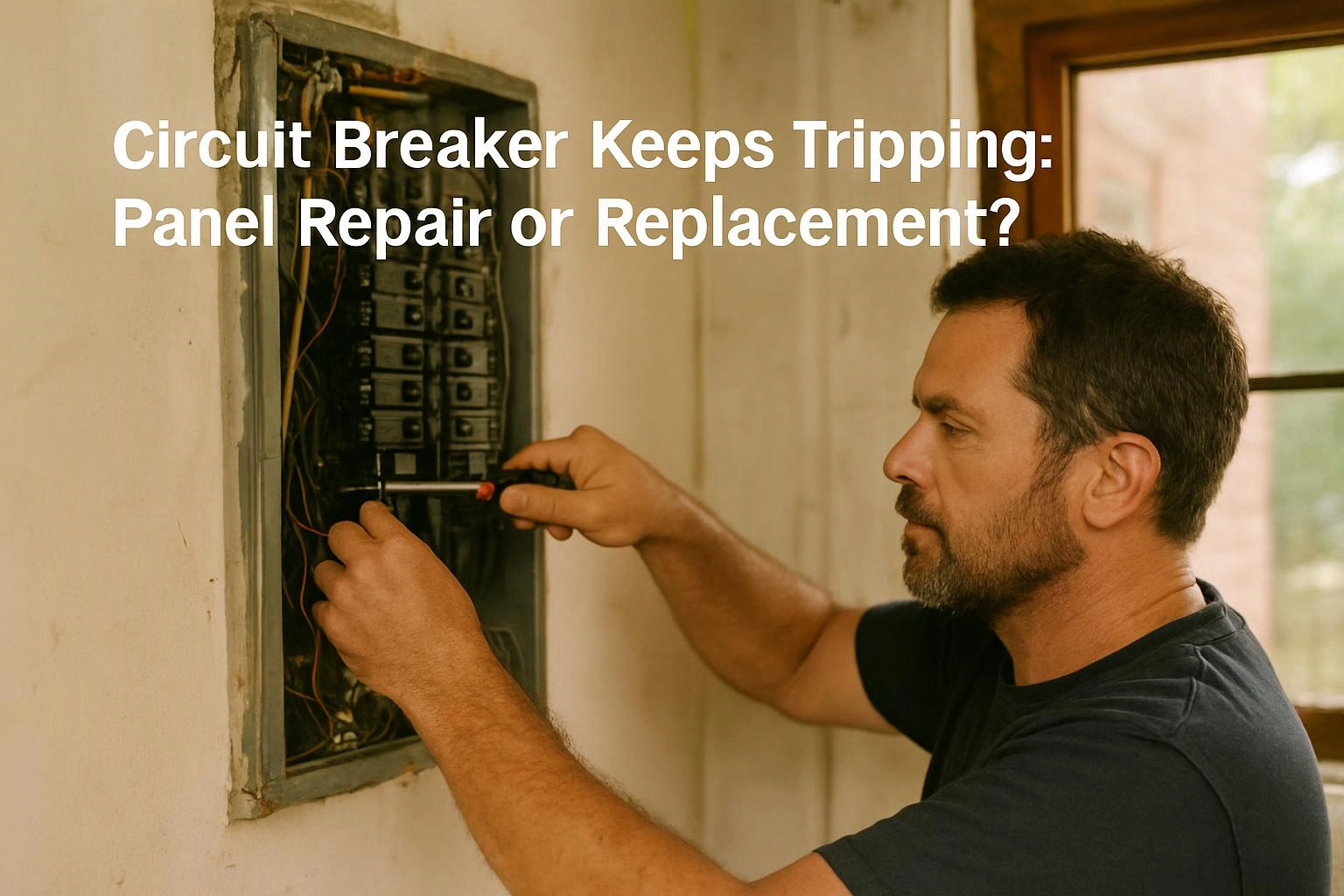
If you smell burning, see smoke, or notice scorching, stay clear of the panel. Contact emergency services when there's immediate danger.
Ways to Help Prevent Breaker Trips
Careful use of electrical equipment can help prevent some breaker trips. These precautions don't replace diagnosis when a circuit keeps tripping.
- Avoid overloading circuits with connected appliances.
- Stop using an appliance that repeatedly causes a trip.
- Keep electrical equipment dry.
- Arrange repair for damaged wiring or outlets.
Diagnosing and Repairing the Affected Circuit
We check the affected circuit and breaker to identify the fault before recommending a repair. Our Electrical Wiring Repair service addresses wiring faults when they cause the problem.
We consider connected appliances and check the breaker condition as part of the diagnosis. The repair scope depends on what we find and may involve the wiring, an outlet, or the breaker.
Contact GMB Electric to discuss the tripping circuit and request an estimate. We'll explain the proposed work before repairs.
Get a Free EstimateFrequently Asked Questions
Can an appliance cause a breaker to trip?
Yes, an appliance can trip a breaker if it's faulty or overloads the circuit. Stop using an appliance that repeatedly causes trips, and contact GMB Electric to check the circuit.
Does a tripping breaker always need replacement?
No, a tripping breaker doesn't always need replacement. We check the breaker and circuit to identify the cause.
What changes the price of repairing a circuit that keeps tripping?
The fault location and repair scope affect the price of fixing a circuit that keeps tripping. Ask us for an estimate that explains the proposed work. Free estimates are available.
What Are the Key Specifications to Know?
- Topic Focus
- Why a Circuit Breaker Keeps Tripping or Won’t Reset
- Related Core Service
- Electrical Wiring Repair
- Evaluation Method
- On-Site Inspection & Written Scope
- Compliance Standard
- Local Building Code & Manufacturer Specs
How Does the Evaluation & Execution Process Compare?
| Evaluation Stage | Technical & Quality Criteria | Timeline Checkpoint |
|---|---|---|
| Initial Diagnostic & Assessment | Identify root cause, site constraints & code requirements | Before any work begins |
| Written Scope & Option Comparison | Compare repair vs. replacement tiers & material grades | Prior to project approval |
| Code-Compliant Execution | Follow manufacturer specs & local permitting standards | During active service |
| Final Verification & Walkthrough | Verify installation alignment, performance & clean site handoff | Upon project completion |