What Is a Transformer?
A transformer is an electrical device that transfers energy between circuits through magnetic induction. A transformer can raise or lower alternating-current voltage while changing current in the opposite direction. Transformers support power distribution, equipment operation, and control systems by matching available voltage with the needs of connected electrical loads.
Quick Facts About Transformer
Category
Power conversion device
Used for
Changing alternating-current voltage
Common confusion
Not an overcurrent protection device
Also called
Electrical Transformer, Voltage transformer
Often discussed with
Commercial Electrical Repair, Electrical Troubleshooting
Key Takeaways About Transformer
- Magnetic induction transfers energy between separate circuits.
- Voltage changes affect available current and equipment compatibility.
- A transformer is not the same as a circuit breaker.
How Transformer Works
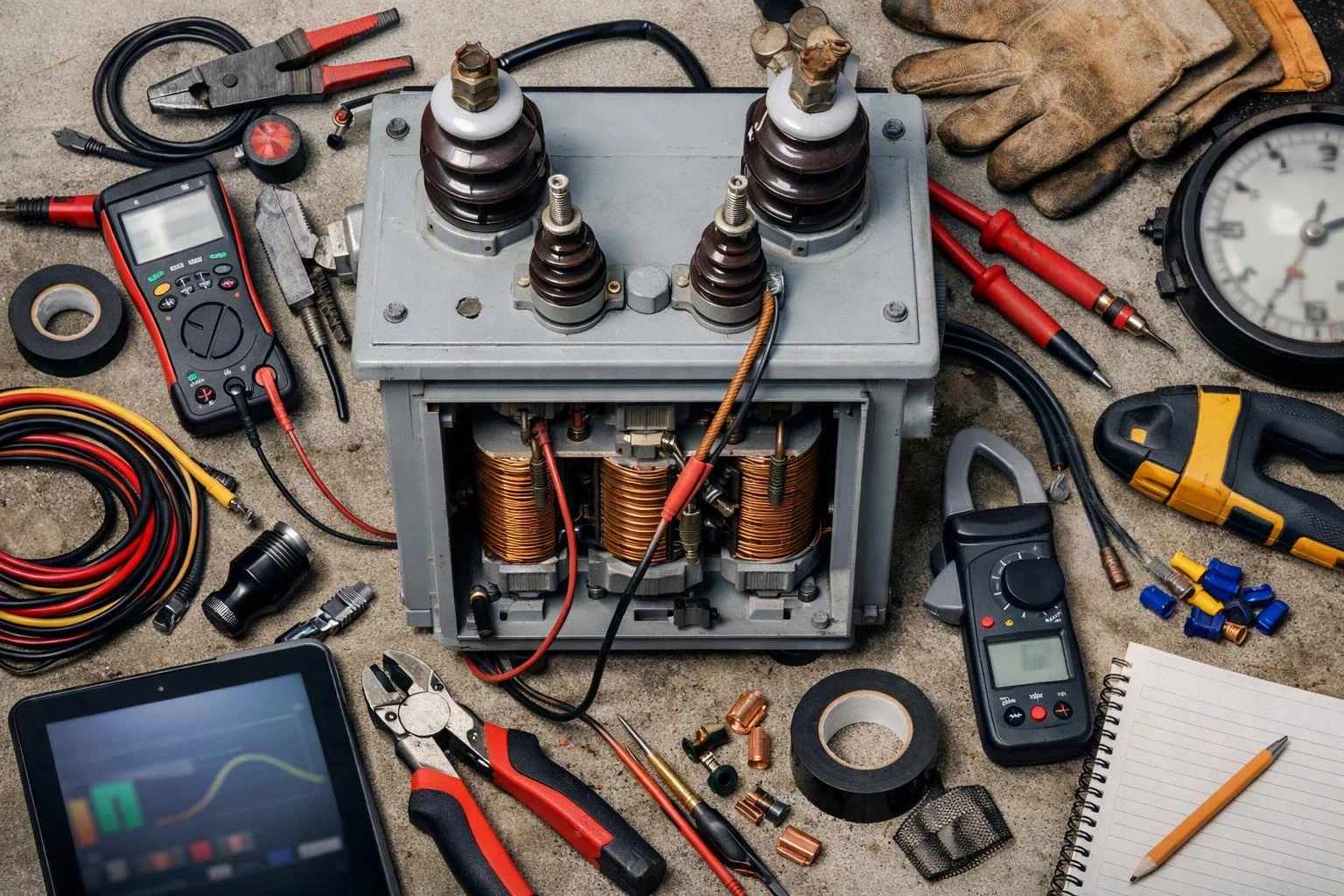
A transformer moves electrical energy between coils through a changing magnetic field. Alternating current creates that field in the input coil, called the primary winding. The field induces voltage in the output coil, called the secondary winding, without requiring a direct electrical connection between the windings.
Related glossary terms: Line Voltage, Voltage Drop, Electrical Load Calculation.
The relationship between the windings determines whether the transformer raises or lowers voltage. A lower output voltage generally supports control circuits, lighting components, or equipment that needs reduced voltage. A transformer may also provide electrical separation between circuits, which can help a system meet the operating needs of connected equipment.
Voltage, current, load demand, connection condition, and signs of overheating help technicians assess transformer operation. A failed transformer may produce incorrect output voltage, unusual noise, heat, or equipment that does not operate as intended.
From the GMB Electric team
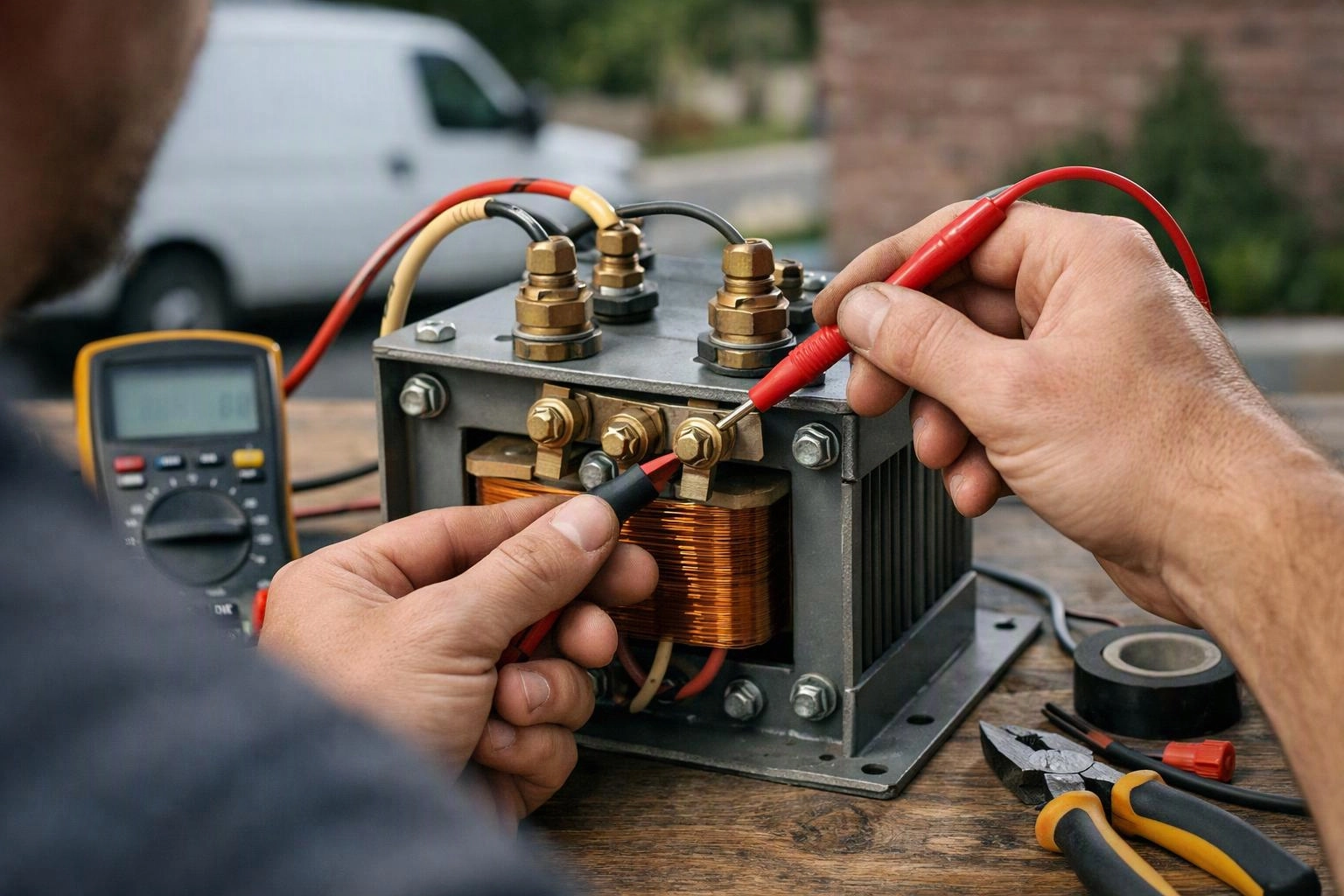
When we inspect a transformer, we check its connections, visible condition, input and output voltage, and the equipment it serves. We also compare the transformer’s role with the circuit design, since a problem may come from upstream wiring, the connected load, or the transformer itself.
Transformer in Practice: A Real-World Example
A commercial building may use a transformer to reduce available voltage for a control circuit serving mechanical equipment. If the equipment stops responding, a technician checks the transformer output along with its wiring and connected controls.
Related Terms
Line Voltage
Line voltage is the electrical potential supplied by a power source to a circuit, appliance, or…
Voltage Drop
Voltage Drop is the reduction in electrical voltage that occurs as current travels through a conductor…
Electrical Load Calculation
Electrical Load Calculation is a structured assessment of the electrical demand a property places on its…
Circuit Breaker
A circuit breaker is a resettable overcurrent protection device that opens an electrical circuit when current…
GMB Electric
Have Questions About Transformer?
Contact GMB Electric for practical guidance on Transformer and related 24 hour electrician work in Indianapolis.