What Is Bidirectional Charging?
Bidirectional charging is a system that lets an electric vehicle battery receive electricity and send electricity back out. Depending on the equipment, the stored energy can power a home or other electrical loads. The vehicle, charger and controls must support the intended use.
Quick Facts About Bidirectional Charging
- Category
- Electric vehicle energy system
- Used for
- Supplying supported electrical loads
- Common confusion
- Connector fit versus full system compatibility
- Also called
- Two-Way Charging
- Often discussed with
- Bidirectional charging system troubleshooting, Electrical Troubleshooting
Key Takeaways About Bidirectional Charging
- A standard charging setup may only send power to the vehicle.
- Available battery charge limits how much energy the system can supply.
- A compatible connector alone doesn't establish system compatibility.
How Bidirectional Charging Works
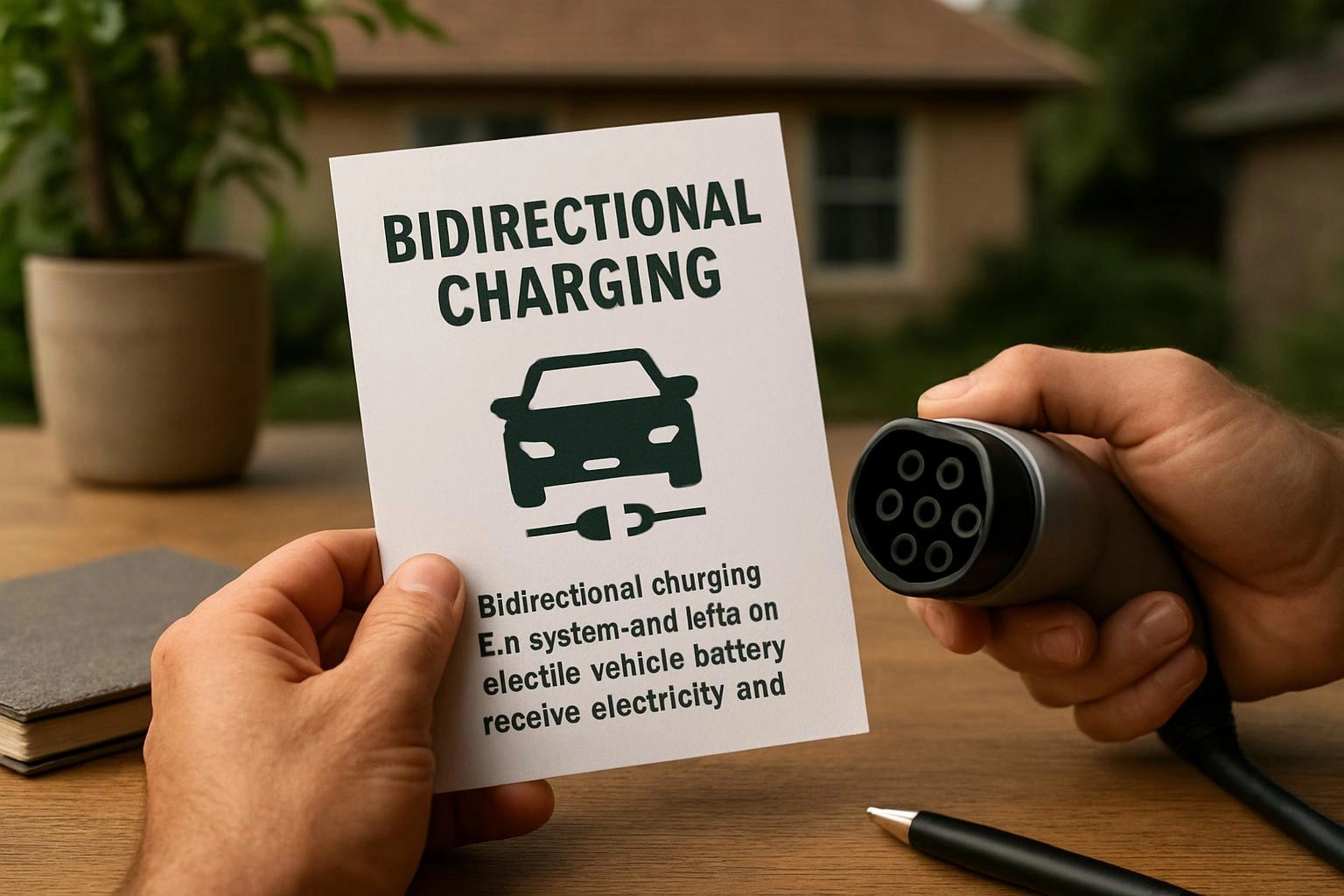
Bidirectional charging relies on controls that manage the flow of electricity. A conversion device changes the battery's direct current into alternating current for supported household loads. The conversion equipment may be part of the vehicle or the charging system. Related service: Bidirectional charging system troubleshooting.
Related glossary terms: Backfeeding, EV Charger Connector, Transfer Switch.
In a vehicle-to-home setup, controls decide when the home draws energy from the battery. Some systems let you set a minimum charge to leave in the vehicle. Your setup may also use a transfer switch to separate the home from the utility supply during an outage.
The amount of power available depends on the vehicle and equipment. A system may supply selected circuits rather than the whole home. Settings and connected loads also affect how the system operates.
From the GMB Electric team
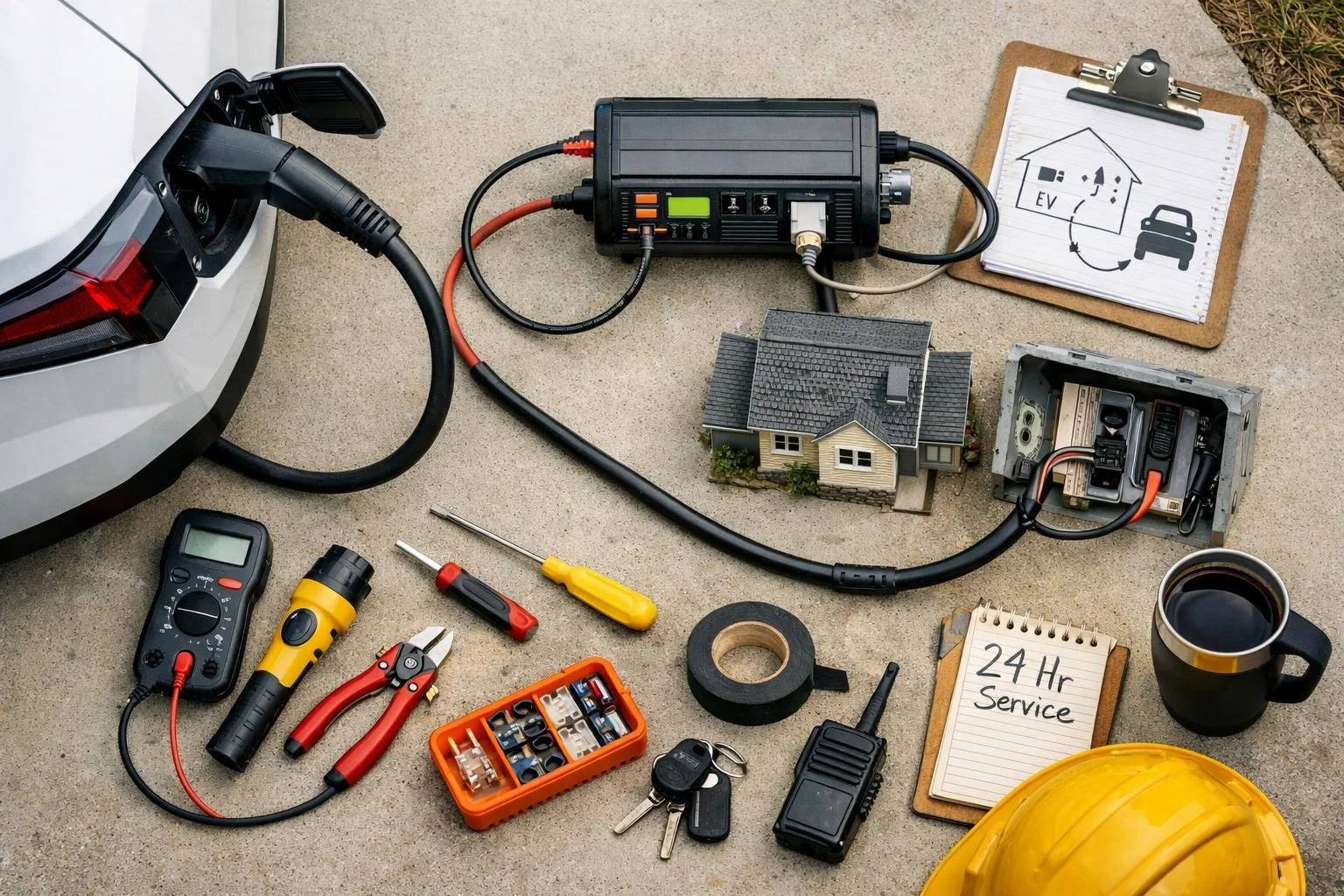
When we troubleshoot a bidirectional charging system, we check the reported fault and the equipment settings. We also look at how the charger and home controls communicate. A charging problem may point to a different issue than a problem supplying the home.
Bidirectional Charging in Practice: A Real-World Example
A homeowner finds that a supported circuit doesn't receive power from the EV during an outage. We check the system's fault message and transfer controls to narrow down the problem.
Related Terms
Backfeeding
Backfeeding is the flow of electricity into a circuit or system from a source other than its usual supply.
EV Charger Connector
An EV charger connector is the plug at the end of a charging cable that joins the cable to an electric vehicle.
Transfer Switch
A transfer switch is an electrical device that connects a building's wiring to a selected power source.
Electrical Panel
An electrical panel is a metal enclosure that distributes electricity to circuits throughout a building.
GMB Electric
Have Questions About Bidirectional Charging?
Contact GMB Electric for practical guidance on Bidirectional Charging and related 24 hour electrician work in Indianapolis.