
What Is an Arc Flash?
An arc flash is a sudden electrical discharge that travels through an unintended path, often through air, between energized conductors or between a conductor and ground. The discharge releases intense heat, light, pressure, and sound. Arc flashes can damage equipment and create serious hazards for people near an energized electrical system.
Quick Facts About Arc Flash
Category
Electrical safety hazard.
Used for
Identifying hazards during electrical inspections.
Common confusion
Arc flash and arc-fault interruption are related but different.
Also called
Electrical arc flash, Arc flash hazard
Often discussed with
Electrical Safety Inspection, Electrical Code Correction
Key Takeaways About Arc Flash
- An arc flash follows an unintended path through air or conductive material.
- Loose connections and damaged insulation can increase arc flash risk.
- An arc flash is not the same as an arc-fault interruption.
How Arc Flash Works
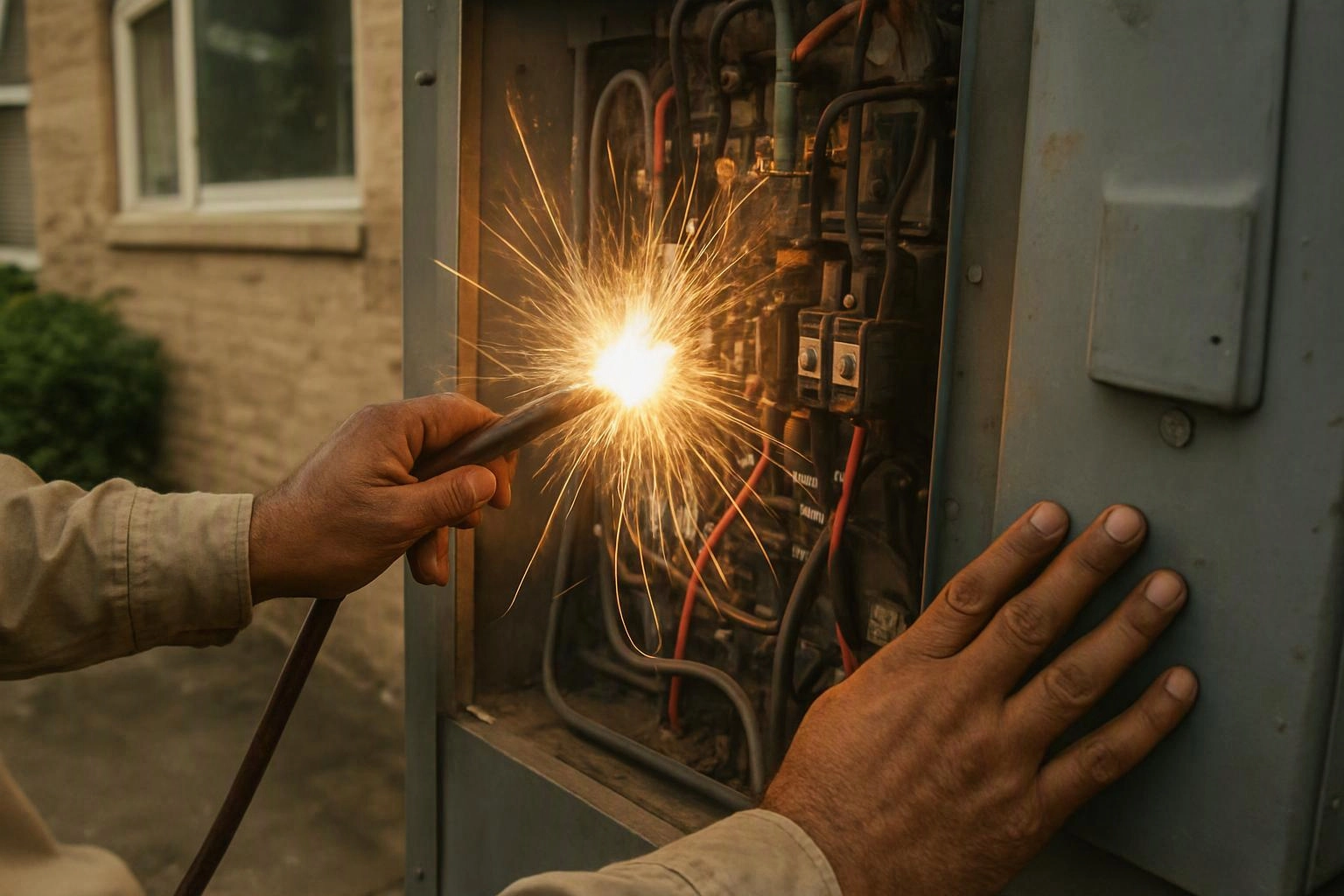
An arc flash begins when electricity leaves its intended path and crosses an air gap or damaged insulating surface. The electrical energy creates a bright arc that rapidly heats nearby air and metal. That expansion can produce a pressure wave, while vaporized metal and intense light can damage equipment and injure anyone nearby.
Related glossary terms: Arc-Fault Circuit Interrupter, Short Circuit, Overcurrent Protection.
During an Electrical Safety Inspection, an electrician looks for conditions that can support an arc, including loose terminations, damaged insulation, contamination, and incorrect equipment connections. A short circuit can create the fault that starts an arc flash, while an Arc-Fault Circuit Interrupter is a protective device designed to detect certain unintended arcing patterns and interrupt power. These terms describe connected parts of electrical safety, but they do not mean the same thing.
From the GMB Electric team
When we inspect an electrical system, we check connections, insulation, enclosures, and signs of overheating that could support an arc flash. We also review panel condition and circuit protection so our findings describe the actual condition of the installation.
Arc Flash in Practice: A Real-World Example
During an Electrical Safety Inspection, a loose conductor inside a panel may leave burn marks and damaged insulation near its termination. That condition can support an arc flash if the conductor shifts or contacts another conductive surface.
Related Terms
Arc-Fault Circuit Interrupter
An arc-fault circuit interrupter is a protective device that monitors electrical current for patterns linked to…
Short Circuit
A short circuit is an unintended low-resistance path that allows electrical current to bypass part of…
Overcurrent Protection
Overcurrent Protection is a system function that limits electrical current when a circuit carries more electricity…
Electrical Grounding
Electrical Grounding is a wiring method that connects electrical systems and exposed metal parts to the…
GMB Electric
Have Questions About Arc Flash?
Contact GMB Electric for practical guidance on Arc Flash and related 24 hour electrician work in Indianapolis.