Skip to content

Smoke Detector Installation in Brownsburg, Indiana

Interconnected alarms get checked for reliable communication in Brownsburg. We install smoke detectors for homes and businesses, with free estimates available.

Licensed & InsuredFree EstimatesSame-Day ServiceServing 41 Communities

Quick Summary: Smoke Detector Setup in Brownsburg, Indiana

Smoke Detector Installation in Brownsburg is provided by GMB Electric for residential and commercial properties. The work covers detector placement, hardwired connections, battery backup, wireless sensors, and testing, with free estimates available.

  • What we do: GMB Electric provides Smoke Detector Installation for homes and businesses in Brownsburg, Indiana.
  • What is included: Detector mounting, hardwired connections, battery backup, wireless sensors, alarm testing, and circuit checks.
  • What you get: The property receives working smoke alarms that communicate as intended and are ready for normal use.

Why should smoke detectors be wired or battery powered in a Brownsburg property?

Interconnected alarms should match the property's wiring, layout, and power needs. Hardwired detectors with battery backup suit properties with accessible electrical wiring, while wireless sensors fit locations where new cable runs are impractical. We inspect the existing setup before recommending the connection type.

Smoke Detector Installation for Brownsburg Properties

Smoke detector installation adds or replaces alarms and checks how each device works with the property. The job suits homeowners, landlords, property managers, and business owners who need new coverage or a safer replacement for aging equipment.

The main decision is the power and connection method. Hardwired detectors need suitable wiring and access to the electrical system. Battery backup keeps an alarm powered during an outage, while wireless sensors can help where new cable runs do not fit the property.

Customers should request an assessment when alarms are missing, disconnected, damaged, or inconsistent across rooms. We inspect the existing devices, confirm the electrical points, and explain the work before installation.

  • Check whether existing alarms are hardwired, battery powered, or wireless.
  • Inspect wiring, mounting points, and battery backup needs.
  • Confirm that connected alarms communicate during testing.
  • Identify damaged, missing, or outdated detectors.
  • Review the work scope before installation begins.
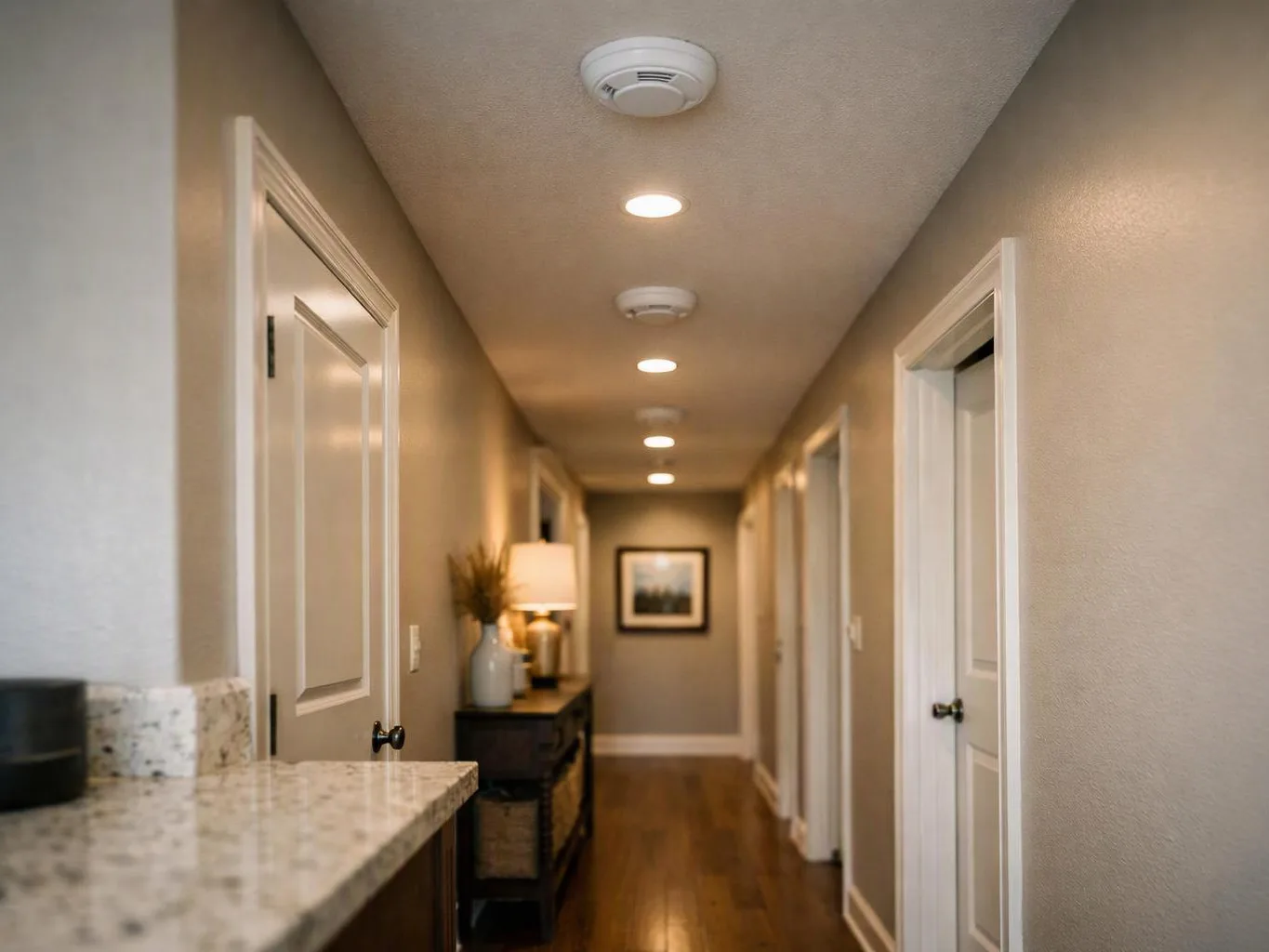
A narrow hallway with white doors, recessed lights, and a small console table leads toward a framed picture at the end

Service Overview

Smoke detector installation is an electrical service that mounts alarms, connects power, and tests warning devices.

  • The work differs from alarm repair because installation adds or replaces detectors, while repair focuses on a fault in an existing system.
  • GMB Electric provides this service for residential and commercial properties in Brownsburg.

What Smoke Detector Installation Includes

GMB Electric provides comprehensive Smoke Detector Installation in Brownsburg. Here's what you get:

  • We inspect existing detector locations and the power source serving each device.
  • We mount smoke detectors in the selected areas and connect approved wiring when suitable.
  • We add battery backup where the detector design calls for it.
  • We set up wireless sensors when new cable access is not practical for the property.
  • We test alarm activation and communication between connected devices.
  • We explain the installed setup and any follow-up electrical work the property may need.

The scope this service is meant to handle

A property owner may find that existing alarms use mixed power sources or no longer communicate. We trace the connections, check the mounting points, and identify whether hardwired detectors, battery backup, or wireless sensors fit the current electrical layout.

How We Approach Smoke Detector Installation

Choose the connection method after inspection

The right setup depends on access to wiring, the existing alarm layout, and the property's electrical condition. Customers get a work scope before installation, and free estimates are available.

Test communication, not just mounting

A detector must respond after it is installed. We test alarm activation, power, battery backup, and communication between connected devices.

Know when another service fits

Smoke detector installation is the wrong job when the main issue is a damaged circuit, a faulty panel, or a broader wiring hazard. We can assess related electrical concerns and identify the needed service.

Work with a qualified electrical team

GMB Electric uses licensed and insured electricians for residential and commercial electrical work, including detector connections and related circuit checks.

Process

How We Install and Test Smoke Detectors

1

Inspect the existing alarm layout

We identify current detectors, missing units, mounting points, and the power source for each alarm.

2

Check wiring and battery backup

We inspect accessible wiring and confirm whether battery backup is present, suitable, or due for replacement.

3

Choose the connection method

We explain whether hardwired detectors, battery-powered units, or wireless sensors fit the property's electrical access and alarm layout.

4

Mount and connect the detectors

We install the selected devices, connect wiring where required, and secure each detector at its mounting point.

5

Test alarms and communication

We activate the alarms and test communication between connected devices before explaining the completed setup.

What New Smoke Detectors Change for You

Connected alarms let occupants hear an alert from more than one part of the property.

Battery backup keeps detection available when normal power is interrupted.

A checked power source helps prevent installation problems caused by damaged wiring or dead batteries.

Wireless sensors can reduce the need for new cable runs in finished areas.

A tested system gives property owners a clear record of what was checked.

Connection Choices for Smoke Detectors

The property’s wiring access and alarm layout help determine which connection method fits.

Connection methodBest fitWhat we check
Hardwired detectorsProperties with suitable electrical wiring accessPower source, wiring path, battery backup, and alarm communication
Battery-powered detectorsLocations where a direct electrical connection is not selectedBattery condition, mounting point, and alarm testing
Wireless sensorsFinished areas where new cable access is difficultWireless communication, power needs, and system compatibility

The GMB Electric Standard

  • Careful Assessment
  • Clear Explanations
  • Safe Practices
  • Orderly Work Areas

Questions About Smoke Detector Installation

Should interconnected alarms be wired or battery powered?

Interconnected alarms should use the power method that fits the property's wiring and layout. Hardwired detectors with battery backup work well when suitable electrical access exists. Wireless sensors can fit finished areas where new cable runs are difficult. GMB Electric checks the existing system before recommending a connection type.

Which part of the property decides the installation scope?

The property layout and existing electrical access decide the installation scope. We check detector locations, ceiling or wall access, wiring paths, and the current alarm connections. Finished surfaces can affect the choice between hardwired detectors and wireless sensors, while a damaged circuit can require electrical repair first.

What should I provide before requesting a detector quote?

Photos of existing detectors and a brief note about the problem help us review the request. Include whether alarms are hardwired, battery powered, or wireless when you know. Property access details also help us plan the inspection and explain which parts of the work may affect the estimate.

Which material changes how long installation takes?

Finished drywall, ceiling surfaces, and concealed wiring can change the installation work. Accessible electrical wiring may support a hardwired connection, while covered spaces can favor wireless sensors. We inspect the access path first, then explain whether added cable work or detector replacement belongs in the scope.

How does a detector visit move from the first call to the last step?

The visit moves from an initial scope review to inspection, connection, installation, and testing. We check the existing alarms and wiring first. Customers then receive the recommended work scope, followed by detector mounting, power checks, alarm activation, and communication testing.

When should a business request new smoke detectors?

A business should request new detectors when alarms are missing, damaged, disconnected, or not communicating across occupied areas. We inspect the existing system and account for access, wiring, battery backup, and business use. Property owners can request an assessment before choosing replacement or added coverage.

Why might a new detector need related electrical repair?

A new detector may need related repair when the existing circuit has damaged wiring, no usable power, or a failed connection. We test the electrical point before installation and explain the separate work needed. Smoke detector installation alone does not correct a wider circuit or panel fault.
Contact

Request a Smoke Detector Installation Estimate in Brownsburg

Do your alarms need replacement, added coverage, or a connection check? Request your estimate, and urgent requests get priority scheduling.

Black outdoor light fixtures and mounting parts are arranged on a wooden surface against a beige background

ZIP Codes We Serve in Brownsburg, Indiana

46112

Smoke Detector Installation in Other Areas

(317) 608-1220