How can I tell if flickering lights point to wiring trouble?
Flickering lights can point to wiring trouble when they continue after the bulb is replaced or affect several fixtures. Loose connections, damaged insulation, and overloaded circuits are possible causes. We trace the circuit and inspect the panel, switches, outlets, and accessible wiring. Stop using the affected fixture if you smell burning or see sparking.
What property condition changes the time needed for wiring repair?
Accessible wiring usually allows a more focused repair than wiring hidden behind finished walls. The location of the fault, damaged insulation, circuit access, and panel condition shape the work. We inspect those conditions first and explain the scope before repair starts. We don't provide a fixed duration without seeing the affected system.
Which wiring parts do you check before repair begins?
Outlets, switches, wire connections, insulation, breakers, and the affected circuit are checked before repair begins. We look for heat, looseness, arcing, visible damage, and signs of overload. The inspection helps separate a local connection fault from a larger panel or rewiring issue.
Why do breakers trip after an outlet or switch problem appears?
Breakers trip when a circuit detects an unsafe electrical condition, such as a short, overload, or fault to ground. We trace the connected wiring and loads, then inspect the outlet or switch involved. Repeated trips should not be treated as a nuisance, especially when heat, odor, or buzzing is present.
How is wiring repair matched to a property's electrical system?
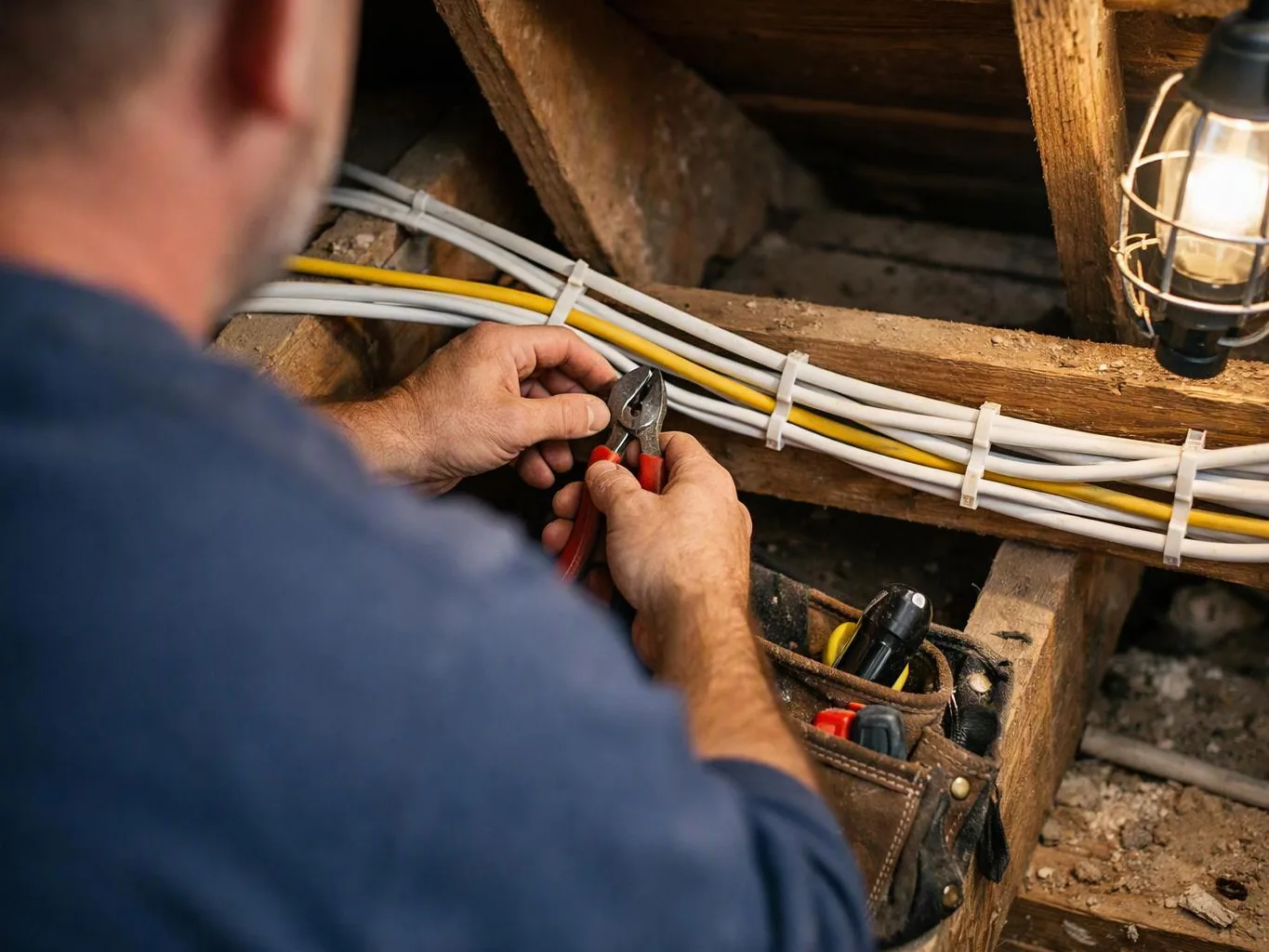
Electrical wiring repair is matched by checking the circuit layout, panel condition, wire damage, connected load, and access to the fault. We use the inspection findings to set a focused repair scope. A broader rewiring plan may fit when damage affects many circuits or the existing system cannot support the property's needs.
What should be ready before wiring repair starts?
Access to the affected room, panel, outlets, and switches should be ready before wiring repair starts. Photos of visible damage and notes about when the fault occurs can help. We still inspect the system ourselves, because a visible symptom may come from a hidden connection or related circuit.
When should I stop using an outlet or light?
Stop using an outlet or light when it sparks, smells burnt, feels warm, or shows dark marks. We treat those signs as possible electrical hazards and inspect the related circuit. Turn off the affected circuit only if you can do so safely, then request electrical service for the property.